Friday, March 11, 2011

Bystander Intervention Lesson Plan


Danni Gilbert from Idaho sent us this detailed lesson plan for teaching Bystander Intervention (Thanks Danni!). That link takes you to a page that includes a detailed description of the lesson, including all the materials you need and a good description of how the lesson authors incorporated assessments into the activity in order to see what learning occurred as a result of the activity (which, as an assessment-geek, I LOVE to see!). It looks like the lesson could easily be extended to include fundamental attribution error and other social psych concepts. Good stuff!

A previous post on this blog includes other resources that might be useful in teaching about the Bystander effect, including a list of videos (note: I checked some of the links to videos and it looks like some of them might be broken now, but most work).

Many folks use the tragic story of Kitty Genovese's murder to explore the potential dangers of bystander effect, and this summary of Darley and Latane's original research is pretty accessible reading for psych students.


posted by Rob McEntarffer

Sunday, March 6, 2011

Mapping the nation's well-being / RPS (NYT)


Two great interactive components in the New York Times this weekend. First, there's a great map of "well-being" in the United States as gathered by the Gallup organization via surveys during 2010. The map shows how people in the entire country (broken down by the 435 congressional districts) rated their happiness, whether they had been diagnosed with depression, stress levels, and many other similar factors. This is a great way to look at factors such as emotion, stress and psychoogical disorders, but to me it's ideal as a jumping-off place for research questions. Why are certain areas high in this aspect, or how does this factor in my community correlate with another factor, etc. If you find some interesting juxtapositions while playing with this map, please share them below. My favorite so far is the seemingly perfect negative correlation, at least to my eyes, between exercise and obesity.

The other component offers you a chance to play Rock Paper Scissors with a computer opponent. Maybe you can't be Ken Jennings taking on Watson, but surely you can take an artificial life form in RPS, right? You're given the choice to play a novice or an veteran (who's learned a few tricks from 200,000 rounds of experience), and once you play to 20 rounds you can share your score on social networks. I'll admit that my first 20 against the novice were 5 wins, 4 losses and 11 ties, while against the veteran I managed 6 wins, but 9 losses and just 5 ties. Interesting to see if your students can come up with a strategy to defeat the "machine"!


  --posted by Steve

Saturday, March 5, 2011

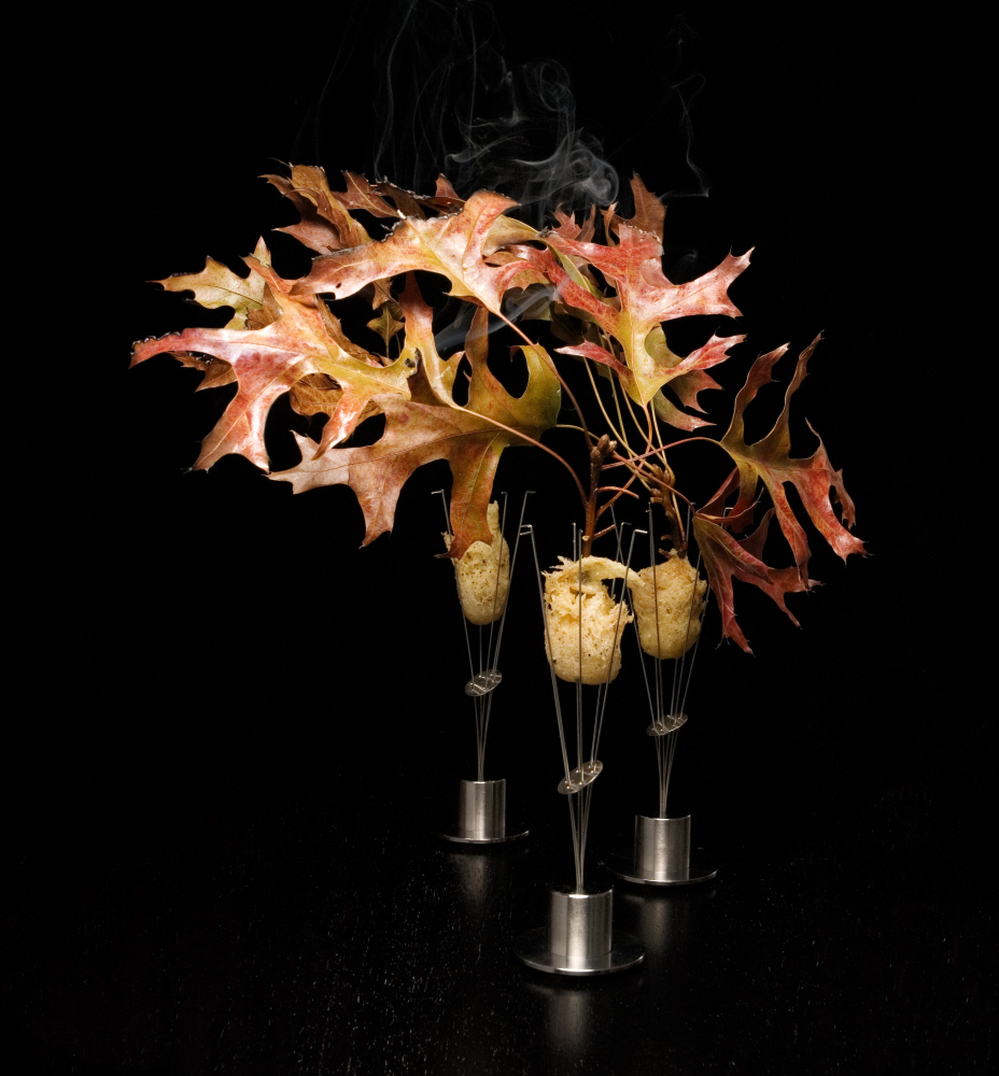
You'll Never Think About Food and Taste the Same Way Again

As often happens, I had "an NPR moment" when I was driving home from school yesterday.  I was listening to my local station, KUSP (to the show Fresh Air) when I heard part of this story about a chef who had lost his sense of taste.  This led him into viewing taste through the sense of smell.  He has a different and engaging voice and a passion about smell and taste that comes through in the interview. The interview is with Grant Achatz and can be read and/or listened to here.


Posted by Chuck Schallhorn

Thursday, March 3, 2011

Ethical Connections in Psychology: Grilling for Science!


One of my favorite assessment/grading bloggers (and yes, I have several, which I know says a lot about me) recently did a classroom activity that might be interesting high school psych teachers, Shawn Cornally (who blogs about science teaching and standards based grading at ThinkThankThunk) decided to grill up some meat for his students to see if they could taste the difference between ethically raised vs. factory raised meat His goal was to get students thinking and help them become "more aware of their food." This might be a great activity in a psych class during sensation and perception: Can students taste the differences between different kinds of food based on how it was grown/raised? What difference thresholds are involved? Perceptual sets? Cultural expectations? And it might be at great connection to ethics - what are the ethical implications of differences in taste, or lack of differences?

This activity might be good in combination with the "Attack of the Blue Tongue" supertaster/non-taster demonstration many of us already do. Thanks for the idea Shawn!

posted by Rob McEntarffer

Wednesday, March 2, 2011

Watch this baby!


Two minutes of sheer delight - I urge you to bookmark this and play when teaching/reviewing development, or just when you and your class need a lift. Love it!

  --posted by Steve

Wednesday, February 23, 2011

What the science of psychology can teach us about our daily lives


Check out the following article entitled, Social Animal: How the new sciences of human nature can help make sense of a life from the The New Yorker. In this insightful tale, David Brooks demonstrates how the science of psychology permeates our daily lives. A wonderful and interesting read!

http://www.newyorker.com/reporting/2011/01/17/110117fa_fact_brooks?currentPage=all

Kristin H. Whitlock

Tuesday, February 22, 2011

2011 APA/Clark University Workshop!


Seven years ago, the generous Dr. Lee Gurel made a generous donation to the APF (American Psychological Foundation) and Clark University to found the annual APA/Clark University workshop for high school psychology teachers (If you're interested in more information about Dr. Gurel and this gift to high school psychology teachers, check out the summary on the APA site). I got to work with the first group of Clark workshop psychology teachers and it is one of the best professional development experiences I've been involved in. The Clark campus is an incredible place for a high school psychology teacher: their archives are some of the best in the country - Freud visited Clark in 1909 and the university maintains maintains an impressive collection of artifacts from this trip and other significant artifacts important in the history of psychology (G. Stanley Hall's desk!). The Clark psychology faculty is committed to helping high school teachers understand current research trends.

The 2011 APA/Clark workshop will be a great experience. Our own Steve Jones (one of the co-authors of this blog - congrats Steve!) and Kristin Whitlock (one of the "rubric masters" at the AP Psychology Reading and psychology teacher-extraordinaire from Utah) will be presenting at the workshop. They will do a great job and you will receive a remarkable amount of activities/demonstrations/great ideas for your classroom. You can read about other details of the workshop (including a link to application materials and information about scholarships) on the APA site.

This year's conference will run from July 11-13 and the application deadline is April 15th. If you can go, you should try to go. You and your students will benefit for years from your professional learning experiences at Clark.


posted by Rob McEntarffer

Monday, February 21, 2011

The Wisdom of Crowds

House, Season 6, Episode 2--the one where there is a rich video-game entrepreneur who becomes ill and seeks out the "wisdom of crowds" while the team attempts to diagnose him without House (who has just recently come back from a psychiatric institution and is no longer practicing medicine).

http://en.wikipedia.org/wiki/The_Wisdom_of_Crowds
http://www.randomhouse.com/features/wisdomofcrowds/

A blog with more details about how this can be used within the context of a psych or stats class.


A counter view on the idea--is there a crowd???


posted by Chuck Schallhorn

Thursday, February 17, 2011

Critical Period - another TED talk, but it's great! Really!


Yes, its yet another TED talk, but its a fabulous summary of recent research on language acquisition and the critical period. Patricia Kuhl summarizes work in her lab about babies and language acquisition and exactly when the critical period window is "open" and when it shuts. I love how she summarizes what's happening cognitively in babies' minds: "They are taking statistics about the languages they hear." Also, I love her slides - great examples of data representation.

This talk might be a great to show in combination with a discussion about the Genie case study, and your bi or tri-lingual kids in class could come up with great examples of phonemes that mono-lingual kids in your class won't even be able to hear.

posted by Rob McEntarffer

Wednesday, February 16, 2011

Mapping the Brain--Brain Atlas Project

Wired Magazine posted an article back in 2009 that touted a full atlas project of the human mind explaining that the Allen Brain Institute for Brain Science were examining the brain gene by gene.  More than the information, the pictures were what struck me some of the images--clean and graphic--and beautiful.

Within the article, there is a hour-long video by Jonah Lehrer (of Frontal Cortex Blog fame) explaining the mind.  It's a great resource for background or as a supplemental project for your biology-based students.

Check it out--you'll be glad you did.


posted by Chuck Schallhorn