Showing posts with label personality. Show all posts

Tuesday, January 12, 2016

Ethically Teaching Psychological Assessment

A while back I posted a blog post about a website that I came across that would be great for our personality units - a website of really cool, original TAT images. I was pumped, but received a message regarding the post from someone much-less-enthusiastic about the post as I was. (I have since deleted the post due the concerns raised.) 


Dr. Ian MacFarlane of Austin College agreed to help educate me (and you, I hope) on why using original TAT, Rorschach or questions from actual IQ tests can be a real ethical dilemma. He also offers some great suggestion on what we CAN do. Here's what he had to say:


Ethically Teaching Psychological Assessment


With so much information at our fingertips, we can easily get primary source material to enrich our classrooms. Showing students pictures of the actual shock machine from Milgram’s study or grainy footage of Watson with Little Albert helps bring concepts to life in a way lecturing cannot. There is one area of psychology, however, where we must practice restraint and actually avoid exposing students to original material: psychological assessment. There are numerous places online where you can find the entire set of Rorschach and Thematic Apperception Test (TAT) cards or sample items from intelligence tests. Our natural instinct is to use this source material in our classrooms, but the problem is psychologists still actively use these assessments in clinical practice. Exposing our students to these stimuli in non-clinical settings can change their responses to these tests if they encounter them later. Thus we need to convey how the assessments work without showing students the exact stimuli used. I offer you a simple method for doing so.


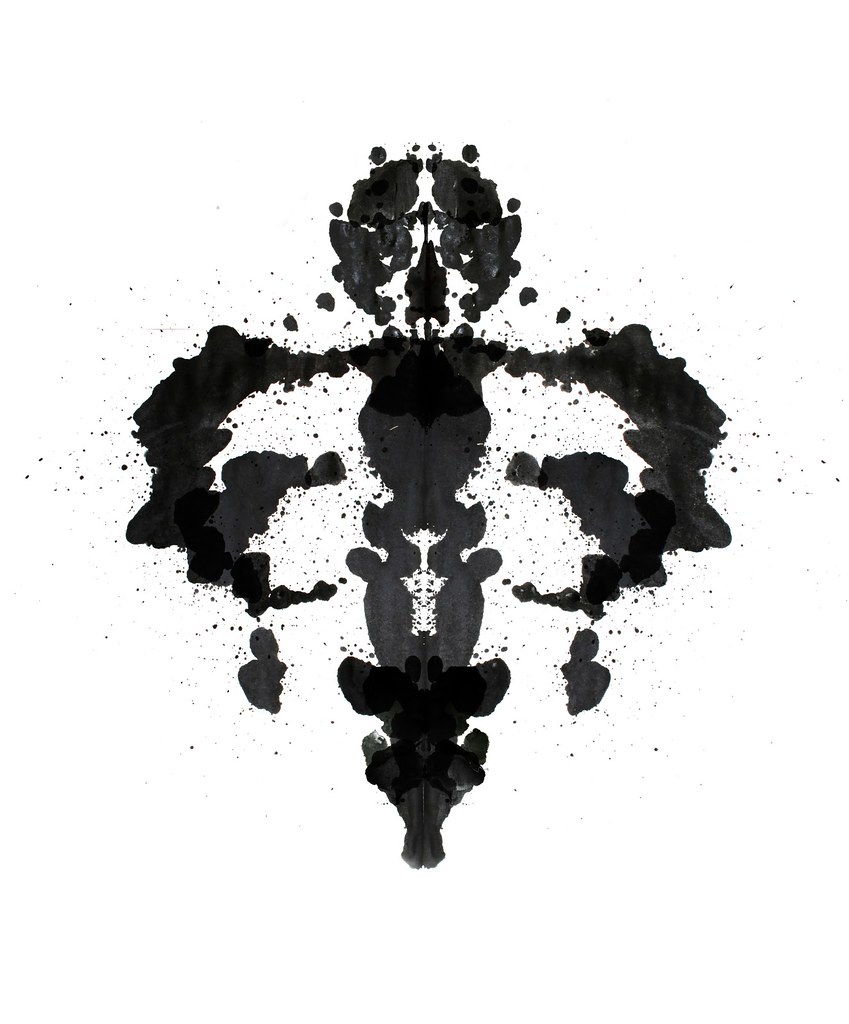
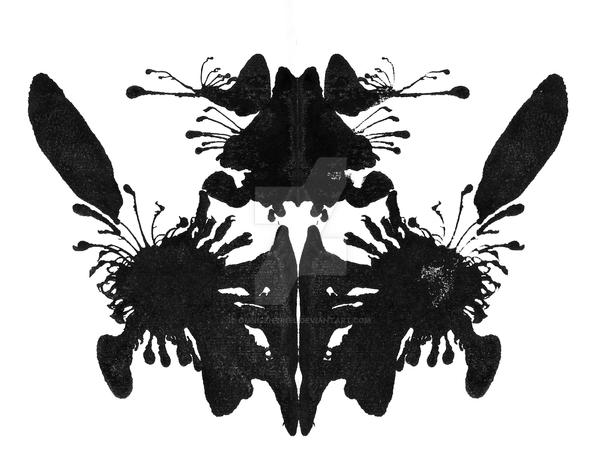
When I teach projective assessment, I usually cover the Rorschach and the TAT. For an in-class activity I take an image I find online to use as an example and have my students write a response as if they were actually being assessed. For Rorschach cards, search “inkblot images” in Google Image search or your favorite image search engine. Since I pass the images out to students for them to refer to later with their notes, I make sure to use an image licensed for reuse via Creative Commons (another search option in Google Image). Here’s an example from Flickr user BradleyLeese and another by DeviantArt user OmniSentinel. Be wary, as a lot of the actual cards are posted all over the web, but you can check the images you find against Wikipedia to be sure it’s not one of the originals. If you want to go a step further, you can have students actually make inkblots of their own. Margaret Peot has a page explaining how to do this as well as several examples. The instructions for the test are to explain what you see in the image.


For the TAT demo, I make sure to search only black-and-white images, and while the real TAT uses drawings exclusively, I don’t think that is essential to understanding the test so I also use photos if I like them. Here you can be creative with search terms, but I like to have multiple people interacting. Here’s an example of a photo I found when I searched for “conversation” (courtesy Flickr user Das Fotoimaginarium), and here’s an example of an engraving in the public domain from 1878 by Ridgway I found when I searched for “arguing.” Searching for images with these types of terms vastly reduces the likelihood that you’ll pull an actual stimulus from the TAT. The instructions for the test are to describe what led up to the moment you are witnessing, what are the characters thinking and feeling, and how does the situation resolve itself?


Explaining the objective assessments, like the MMPI, is typically more straightforward, but it is still important to not use actual items from the assessment. A demo I like to use when I introduce the empirical keying method of the MMPI starts by asking students to raise their hands if they enjoy going to concerts. I inform those who raised their hands they just received a point on the mania scale of the MMPI. While the other students snicker, I inform them they received a point on the hypochondriasis scale. I ask them to make sense of that, and eventually we get into the process used to develop the MMPI. I tell them afterwards that I made up the question, but it still illustrates the process nicely and gets them to think about psychometrics and the importance of norm groups.

Using these simple methods will allow you to confidently simulate the experience of taking a projective assessment while protecting the integrity of these tests so they can continue to be used in clinical settings.


Thanks to Dr. MacFarlane for educating me (Sorry, again!) and for the great suggestions. Ian MacFarlane, PhD (Follow him on Twitter at @I_MacFarlane) is an assistant professor of psychology at Austin College in Sherman, TX. He teaches general psychology, research methods, and several clinical psychology courses.

---- Posted by Amy Ramponi 

Saturday, September 26, 2009

Jung's The Red Book coming soon

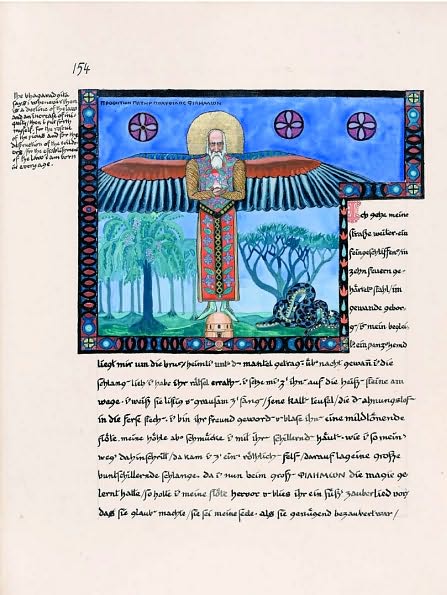
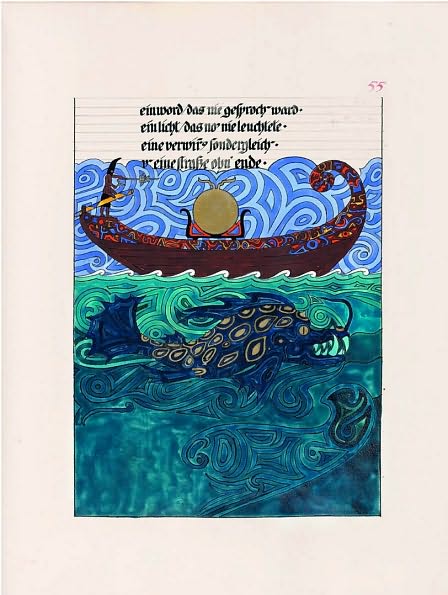
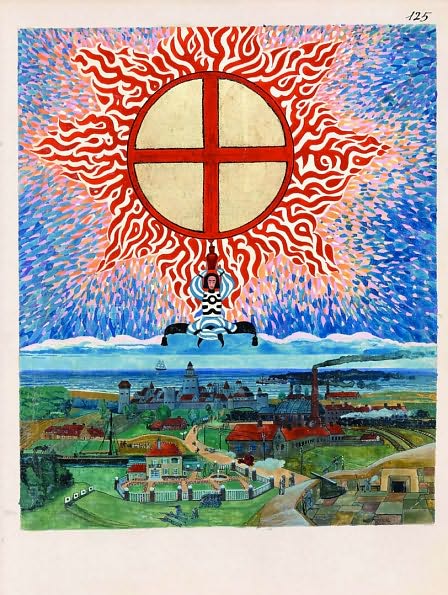
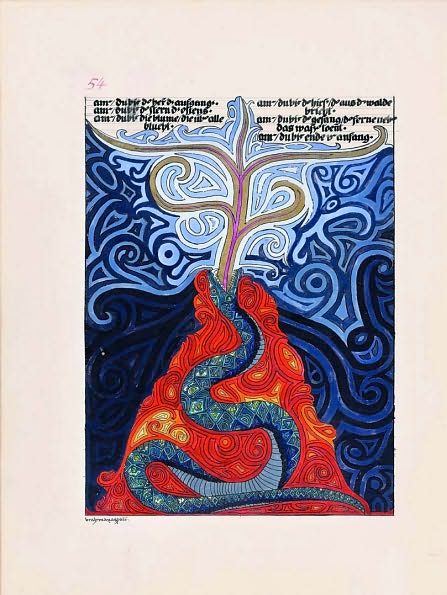
Thinking of updating your wish list? You might want to consider adding this one: in October WW Norton will publish Carl Gustavus Jung's The Red Book for the first time. Featured in a lengthy article in the New York Times Magazine earlier this month and referred to by the publisher as "the most influential unpublished work in the history of psychology," the book is from a journal written and illustrated by Jung over a 15 year period. It was been hidden from the public view by Jung's heirs until they very recently made the decision to publish it.

What's the book about? Here's a quote from the NYT article to get you started:
The Red Book is not an easy journey — it wasn’t for Jung, it wasn’t for his family, nor for Shamdasani, and neither will it be for readers. The book is bombastic, baroque and like so much else about Carl Jung, a willful oddity, synched with an antediluvian and mystical reality. The text is dense, often poetic, always strange. The art is arresting and also strange. Even today, its publication feels risky, like an exposure. But then again, it is possible Jung intended it as such. In 1959, after having left the book more or less untouched for 30 or so years, he penned a brief epilogue, acknowledging the central dilemma in considering the book’s fate. “To the superficial observer,” he wrote, “it will appear like madness.” Yet the very fact he wrote an epilogue seems to indicate that he trusted his words would someday find the right audience.
At the bargain price of $105 (at Barnes and Noble -- Amazon appears sold out and now has a delivery date of December for new orders) I'm guessing this one will be a perfect present for others to give you!

Finally, as a geek I personally love the fact that "a 10,200-pixel scanner suspended on a dolly clicked and whirred, capturing the book one-tenth of a millimeter at a time and uploading the images into a computer." Below are some of the images for you to enjoy.

Monday, June 22, 2009

Psych in the news

Among Many Peoples, Little Genomic Variety. "But as analyses of genomes from dozens of distinct populations have rolled in -- French, Bantu, Palestinian, Yakut, Japanese -- that's not what scientists have found. Dramatic genome variation among populations turns out to be extremely rare."

Positive Is Negative. "Despite what all those self-help books say, repeating positive statements apparently does not help people with low self-esteem feel better about themselves. In fact, it tends to make them feel worse, according to new research."

In New York, Number of Killings Rises With Heat. Seven homicides in New York City. None connected in any way but this: They happened during the summer months, when the temperatures rise, people hit the streets, and New York becomes a more lethal place.

Get a Life, Holden Caulfield. "Some critics say that if Holden is less popular these days, the fault lies with our own impatience with the idea of a lifelong quest for identity and meaning that Holden represents ... Ms. Feinberg recalled one 15-year-old boy from Long Island who told her: “Oh, we all hated Holden in my class. We just wanted to tell him, ‘Shut up and take your Prozac.’”

The return of trepanation? Trepanation, the ancient practice of drilling a hole in your skull to relieve pressure on the brain, is now being studied as a possible treatment for dementia.

Keeping an Open Mind to Animal Homosexuality. 'Sure, it’s widely recognized that the animal kingdom is full of male-on-male and female-on-female action, from fruit flies on up to bottlenose dolphins and, of course, Homo sapiens. But though the origins and evolutionary consequences of homosexuality are varied, biologists tend to oversimplify such behavior.

Do you have what it takes to be a NASA pillownaut? Great story (with pictures like the one at the top) of how research is done. Imagine telling your kids that your role in helping space research was spent lying in bed!

Saturday, February 14, 2009

Psych in the news

Should scientists study race and IQ? No, society and science do not befit. Yes, the scientific truth must be pursued. (Nature)

The truth is, spotting a lie isn't as easy as it looks. (Washington Post)

Sensors help keep the elderly safe, and at home. (NY Times) [Slate calls is Lojack for people.]

Jonah Lehrer says diet soda's not our friend; the brain doesn't like to be tricked. (Science Blogs)

Toronto's holding the world's first (?) music concert accessible to the deaf and hard of hearing. (Boing Boing)

How your looks betray your personality. (New Scientist)