Showing posts with label Online Resources. Show all posts

Sunday, August 12, 2018

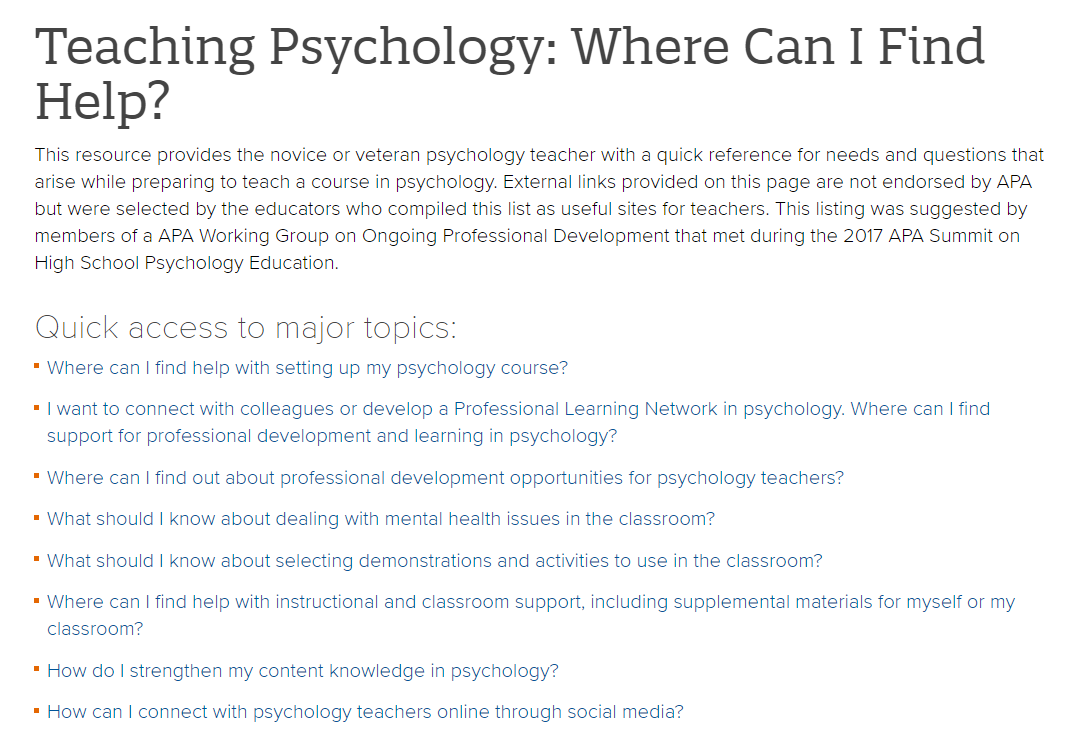
Teaching Psychology: Where Can I Find Help?


The great folks at the APA/TOPSS have created a wonderful list of online resources for psychology teachers called, "Teaching Psychology: Where Can I Find Help?" Highlights include information for regular psych, IB Psych, and AP Psychology; professional development; course development; PLNs; much more.

Check out the resources at the link above. Incredibly helpful for any teacher, not just teachers new to the profession or subject area.

posted by Chuck Schallhorn

Friday, July 28, 2017

The Amazing Dr. Joseph Swope and His Fabulous Web Site

Dr. Joseph Swope (Joe) is a high school psychology and AP Psychology teacher from the East Coast (Maryland). He's also worked at the Springfield Power Plant and Xavier's School for Gifted Youngsters (if his Facebook profile is to be believed). In any case, Joe is prolific in his giving back to the psychology community. Check out his bio to the right.


In short, if you teach psychology, go to his site, swopepsych and sign up for an account--it's free and the resources are so amazing!

Here are a few of the items that he has shared.

Joe has put his video lectures/textbook online. Great resources for students and teachers.

His expansive list of resources can be found here.

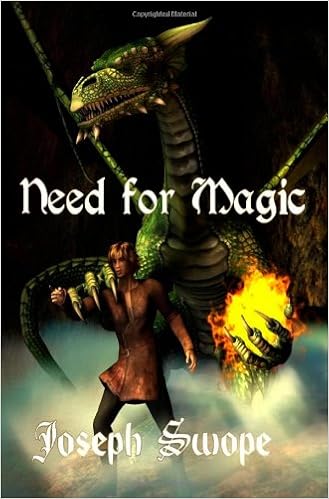
He is also an author of a book called Need for Magic that incorporates social psychology concepts throughout.


So what does Dr. Swope's site have to offer teachers? 
  • hundreds of video clips from movies and television shows
  • lots of activities and worksheets for various classwork and homework use
  • Video textbook has 93 thirty minute videos--each was shot with two 1080i (that is hi-def) cameras with microphones around the room to pick up on the class dynamics
  • Sooooo many resources
  • A log-in system for teachers and students
  • Coming soon: a system where the teacher can assign a particular video, have the student watch it and take a quiz with a resulting email to the teacher with quiz results. Joe is also working on randomizing the quizzes to reduce cheating.
  • A site that offers what teachers and students can actually use--Joe is a high school classroom teacher--he knows what we need and what we don't


posted by Chuck Schallhorn

Tuesday, January 10, 2017

Blended Learning: Caveats, Cautions, and Adjustments

The Move From Sage to Guide


I currently teach at a school (Mountain House High School, California) that has implemented a 1 to 1 method, with Chromebooks being the tool of choice. We are a Google (Google Apps for Education-GAFE) campus--all students have a school-issued Gmail account which enables access to Google Drive, Docs, Spreadsheets, Drawing, Slides, etc. This basic suite of tools alone can make your life so much easier. There are some shortcuts and tips to using these tools which Alice Keeler has demonstrated. Be sure to follow her on twitter and/or on her email list. I will make another post about things to definitely do and things to avoid while using the GAFE tools.


One of the biggest things to become accustomed to in the blended learning environment is no longer being the person at the front of the room with something to do all the time. You will experience some cognitive dissonance. They key is how you will resolve that internal conflict. How will you overcome the old habits and expectations that have become engrained in your schemas about the education process?

Over the years, I had created many daily lessons that involved me at the heart of the classroom asking questions, being the primary reviewer, going at my pace, doing what I wanted/needed to do. What students did I leave behind? What advanced students did I slow down in order to keep them in lock step with my calendar and pacing? How can I use the tools at my disposal to expose them to a variety of psychological content? How can I use those extras to enhance primary content without losing the primary content? How can I leverage what I've learned from other teachers

As adults, when we are learners, we are busy, occupied with reading or solving problems or thinking of ways to address various issues we encounter. We may be deep in thought one moment, though ready to converse or ask a question at another. When we allow students to take the time to learn in class, there can be periods of silence where there is nothing immediately for teachers to do. This can make many of us very uncomfortable. This could be down time or sit at the computer time, but I see that as a waste. In my opinion that "down time" can be incredibly valuable.

The teacher can walk around to:

  • make oneself available for questions as they arise
  • make sure students are on-task
  • ask questions of students--have them explain what they are reading or HOW they are solving a problem, depending on the work being done by students
  • identify students who complete the work early or quickly and ask to check out their work and question what they have learned--often, students overlook key feature/aspects of an assignment when it is done too quickly
  • get their ten thousand steps in
  • identify classroom relationships and interactions

When a teacher is freed up to allow the students to work, something potentially magical can happen. Rather than 30+ teenagers looking bored, falling asleep, or using their phones, we treat them like adults, let them know what they are responsible for and allow them to live up to expectations.

One Tough Change

Let go of your ego. Many of us who have been teaching in the traditional style see ourselves as an actor, entertainer, laugh maker, steward of knowledge, and more. We need to change from being the focal point of the classroom to being "only" another important part of the classroom. This switch is more difficult for some than others. Instead of preparing lectures to be delivered at our pace, we will be creating learning experiences that students can follow at their own pace.

You must reexamine what you want students to get out of your classroom and your subject matter. Do you want them to "know things" or do you want them to be able to "do things"? What is more important, that students know about Ghrelin and Peptide YY and be able to recall the difference in a multiple choice question? Or is it more important that they learn about the hormonal processes about hunger and take that knowledge and be able to use it while explaining eating disorders to a wider audience in a student-led TED-style talk/presentation? Goals may change with blended learning.

Cautions

If you are anything like me, you will love getting out from under the literal mountain of paperwork that comes with traditional teaching.

  • It will take time to become accustomed to not having handouts all the time
  • Get used to asking students for technology help
  • Learn to be comfortable with the potential chaos and the unknown
  • As my principal, Ben Fobert says, "embrace the ambiguity"
  • The more you get used to the internet as your best friend, the happier you will become
  • The more you get used to the internet, the more frustrating it will become if it does not work
  • The internet will not always work
  • I repeat, the internet will not always work
  • As with other methods, become knowledgeable enough to have backup plans in case your primary ones do not work


posted by Chuck Schallhorn
Thursday, June 30, 2016

TOPSS Resource Manual for New Teachers of High School Psychology

The APA/TOPSS released a manual for new psychology teachers, and it looks like it's full of great resources! See the announcement below for details.

"New high school psychology teachers may have a number of questions about how to proceed with instruction in their first psychology teaching assignment. What is the best way to choose a textbook? How do teachers find substantive and effective activities? How can teachers find quality support resources? Questions like these are just a few that are repeatedly posted to listservs when new teachers are looking for help. The purpose of this document is to present new high school psychology teachers with some resources and helpful suggestions from teachers with many years of teaching experience. This resource begins with suggestions for preparing to teach psychology, textbook selection, course-pacing formats, and lesson planning - the underpinnings of an effective psychology class. The next set of topics address specific issues faced by high school psychology teachers and are designed to help new teachers be proactive when deciding how to run their class, make rules, and make daily ethical decisions. The authors believe that this resource will prove very useful to teachers new to the teaching of psychology. It can facilitate their being able to approach their new assignment with more confidence and poise, equipped with strategies for effective instruction."

Resource Manual for New Teachers of Psychology


posted by Rob McEntarffer
reposted by Chuck Schallhorn


Sunday, June 26, 2016

Psychology Shopping: Megapost

Are you ready to do some shopping?  If so, below is a list of places you can find wonderful items for your own personal collection and/or your classroom.

Please be sure to add any places or ideas in the comments!


Books

I will do a separate post on all of these at some point in the future, but here are a few pictures of my bookshelves-I can recommend nearly all of these; I have not gotten to all of them (and this is not even all my psych books)--sorry for the mess, I just recently moved:


PsychKits

http://psychkits.com/ 
Includes inversion goggles, activities, and many other resources


Amazon.com

The THSP Psych Store--lots of possibilities

Lots of different brain models

Psychology Games

Psychology Jewelry--seriously, this is a thing!


Apps

iScore5 Psychology App
https://www.facebook.com/iScore5APPsych/
https://itunes.apple.com/us/app/iscore5-ap-psych-2016/id1084611907?mt=8

Psych Hero
https://itunes.apple.com/us/app/psychero-test-prep-for-ap/id492497083?mt=8


Psychology Posters


Holstee Manifesto Poster
https://www.holstee.com/collections/all/products/holstee-manifesto-poster 

If you can print out your own posters (and possibly have them laminated by your school), Pinterest has numerous possibilities:
https://www.pinterest.com/search/pins/?q=psychology%20posters&rs=typed&0=psychology%7Ctyped&1=posters%7Ctyped


From the APA, Classroom Posters--downloadable
http://www.apa.org/ed/precollege/undergrad/classroom-posters.aspx


Anatomical Prints
Skull Anatomy
http://anatomicalprints.com/human_skull_anatomy_chart.html

Anatomy Warehouse
Spinal Nerves
https://www.anatomywarehouse.com/spinal-nerves-anatomical-chart-a-102614

Organs of the Ear
https://www.anatomywarehouse.com/the-ear-organs-of-hearing-and-balance-anatomical-chart-a-102574

Brain Poster-$11
https://www.anatomywarehouse.com/the-brain-anatomical-chart-a-102567

Brain Model
https://www.anatomywarehouse.com/deluxe-human-brain-anatomy-model-a-100130

Brain Model with Arteries-$344
https://www.anatomywarehouse.com/deluxe-brain-anatomy-model-with-arteries-9-parts-a-100472

Giant Brain Model-$467
https://www.anatomywarehouse.com/giant-regional-brain-anatomy-model-a-103132


Teachers Discovery Store-Psychology Page

Social Studies dot com
They have a little bit of everything, but especially books and DVDs. They tend to be a bit more expensive

Cafe Press Psychology Jewelry

Cafe Press All Gifts


The Psychology Shop
for lots of different ideas including Jung and Freud finger puppets--don't even think about commenting on this one
Freudian Slippers

Zazzle Psychology Gifts


Etsy Psychology Gifts

Sniffy the Virtual Rat (Lite Version)


Again, if I have missed anything, please leave a note in the comments or email me at thspblog@gmail.com 


posted by Chuck Schallhorn


Friday, April 22, 2016

Why We Sleep: A TED Talk

Why We Sleep
·http://www.ted.com/talks/russell_foster_why_do_we_sleep

Russell Foster studies sleep. In fact, he's a circadian neuroscientist, which means he studies what happens to the brain when it does - and doesn't - sleep. This entertaining talk, just under twenty-two minutes in length, covers a range of sleep-related topics from the amount of sleep people typically got before the invention of the lightbulb (hint: a lot more than we get now) to dangers of depriving teenagers of their bed rest. Along the way, Foster asks and tries to answer, the age-old question of why we sleep and explores the relationship of interrupted sleep cycles with mental illness. Subtitles for the talk are available in 36 languages


posted by Chuck Schallhorn

Tuesday, July 21, 2015

New for AP/Regular Psychology Teachers--Resources Galore

The following is a combination post with new material from Chuck and reminders from Steve

Updated resources for teachers new to high school psychologyWelcome new psychology teacher! Congratulate yourself on finding/stumbling on/being forced to teach the best class in high school!


There is an abundance of materials out there so you don't have to reinvent the wheel your first year (although you should feel free to after that). Here are some of the best resources to start with:


1) TOPSS stands for Teachers of Psychology in Secondary Schools and is part of the American Psychological Association. Join TOPSS and you become an affiliate member of the APA at a fraction of the cost that other professionals pay, only $50 per year.
*NEW* In 2011 teachers on the TOPSS board created a manual for new high school psychology teachers. This was written by high school psychology teachers who have "been there" with few resources and little help among your building colleagues. Be sure to check this out!
TOPSS has lesson plans for every unit of the high school psych course and is in the process of revising older units so that the lesson plans remain vital and useful. They're created by high school teachers and are edited by psych professors. There's also a quarterly newsletter, the Psychology Teachers Network, and an annual workshop for high school teachers at Clark University. Finally, and maybe most importantly, the APA and TOPSS have created the National Standards for High School Psychology. The first version of standards was created in 2005 and the newest version of the standards was released in 2011. (Full disclosure: I'm currently chair of the TOPSS Board.)

2) The College Board. Even if you don't teach AP Psychology this is a great resource -- and if you do, it's terrific! Here are some pages to start with.
a) The AP Psych home pageb) The course description (aka the Acorn Book, in PDF; updated Fall 2013)
c) The AP Psych teachers guide -- written by THSP's own Kristin Whitlock, this thing is a beauty and a GREAT place to get started if you're new to the course (also in PDF)
d) Old AP Psych exam questionse) AP Psych store - you may want to buy the 2004 and 2007 released exam multiple choice questions at some point
f) *NEW* If you are an AP Psych teacher, be sure to join the online AP Psychology Community.

3) *NEW* Twitter! You will be amazed at all the valuable resources that are at your fingertips via Twitter. Many high school psychology teachers (like myself) consider my colleagues on Twitter to be an extremely valuable part of their personal learning community, and often share ideas and resources with each other. In the past couple of years #psychat has become a great way to share information as well - see this post for more information.
Other teachers are also using Twitter as a way to interact with their students online in many ways, such as commenting on news articles, sharing new sites and even homework reminders. In 2015-2016, the group will be tweeting the First Wednesday of each month at 8PM EST, 7PM CST, 5PM PST
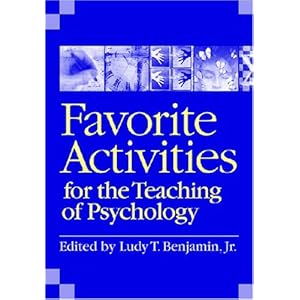
4) Teaching psychology activity books. These were compiled by Ludy Benjamin et. al. and have a wide variety of activities for intro psych courses. Some are hits and some are misses (in my opinion) so you might want to buy one and see what you think. Here are several to try.
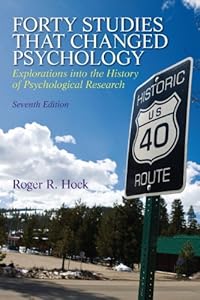
5) Forty Studies that Changed Psychology. An excellent overview that will be invaluable to you if you're just getting started, and is often used by many AP Psych teachers during the year or as a summer  assignment.
6) The publisher of your textbook. Find out what book you'll be using, then contact the publisher and get in touch with the high school representative for psychology. They are usually very helpful and can give you an idea of what might be available for you for free. A great tip from Michael Donner on the AP Psych list is to contact a publisher of another psychology textbook and see if you can get an exam copy of that book (or even find a used copy online). A second book can be very helpful for helping you come up with alternate examples or explanations for your students.
7) The National Council for the Social Studies Psychology Community. This group is part of NCSS and helps psychology teachers in many ways, including annual presentations at the NCSS conference, newsletters and more. You can e-mail chair Daria Schaffeld at daria.schaffeld AT d214.org to get a copy of the latest newsletter and to find out more. Also, consider attending the annual NCSS Conference to hear great presentations.
8) Your fellow teachers! If you know others in your district or region who teach psych, contact them and ask for help. Most psychology teachers are still the only ones in their school, so getting in touch with folks who are nearby and are willing to share can be immensely helpful. Or join an e-mail list for psychology teachers such as Psych-News, TIPS or PsychTeacher (see a full list here) and make connections all over the world!
9) A final rec and plug: this Teaching High School Psychology blog which is run by Kent Korek, Chuck Schallhorn, Rob McEntarffer, Nancy Diehl, Kristin Whitlock, and Steve Jones. It's a site for us to share with our fellow teachers the things that we like, find interesting, have questions about, etc. Follow us via e-mail so you are notified every time we post something new, in your RSS reader or just bookmark us and visit when you can. You can also follow me (Steve) on Twitter at @highschoolpsych.
10) Brain Games, the video series from National Geographic is outstanding for psychology and neuroscience demonstrations. In fact, it has overtaken many of our in-class demos both in terms of quality and quantity.  You can purchase the DVDs online at Amazon.com or stream a couple seasons on Netflix. For content guides for all five seasons, click here.

11) Chuck Schallhorn has a YouTube Channel that can help out with some of the more complex ideas for the students at: https://www.youtube.com/channel/UCOG05VwbujNwGUX5UA0zcXQ
12) Chuck also has an entire online AP course in video format @ https://www.educator.com/psychology/ap-psychology/schallhorn/  It costs money, but if you are desperate, this should help out

13) We have a THSP Psychology folder on Google docs that has many resources for each unit. These activities have been vetted and are appropriate and quality lessonshttps://drive.google.com/open?id=0B28t_LsPkwHefnRSTU5aWVFQVHo3MVBSZEEzTHczTXpPT09EMzVOLXhsdVBVRmdNTmRNUms**test out this link and make sure you can get inside each folder. Contact Chuck if there are any issues with the link.

14) When planning a new unit, check out this blog at http://teachinghighschoolpsychology.blogspot.com/ and do a unit search for videos and assignments that we have. You can do this by checking out the list of units in the left-hand column of the blog. There are hundreds of ideas and resources we have posted throughout the years.
One final bit of advice: Psychology is a science. It doesn't matter what your background is as long as you're willing to embrace the scientific perspective and run with it. Have fun and enjoy teaching psychology!

15) APA Division 2-The Society for the Teaching of Psychology. They have an amazing set of resources on their OTRP website.

16) Check a later post in which Rob will take a look at the videos of Joseph Swope.

17) Check a later post in which Chuck adds Crash Course Psychology video guides.

If there are any resources we missed, please leave them in the comments.

posted by Chuck Schallhorn and Steve Jones


Monday, October 21, 2013

All-About-Psychology

I'm on facebook way too much and one of my favorite pages to follow is All-About-Psychology.  The authors share many ideas and trivia related to psychology's content and history.  Their main website is: http://www.all-about-psychology.com/.   You can find them on facebook at this link: https://www.facebook.com/psychologyonline.  The author of the page also offers free kindle versions of his work from time to time.  It's worth a look.

You will find ads on their site, but they have some pretty good content, just check out the links along the left hand side.


posted by Chuck Schallhorn

Sunday, August 5, 2012

Looking for Some Review? Psych Courses Online

I begin next week with classes starting on August 13.  I know, it's really early.  On the off chance some are still on summer break and would like to do some review/look for some teaching insights for psych, I ran across this website that has condensed some online courses into on set of links.

The entire site list of courses is here:
http://www.openculture.com/freeonlinecourses

The Psychology Courses are here:
http://www.openculture.com/psychology_free_courses

Many of these link to courses existing on iTunes, others on YouTube and other sources.  Some are introduction courses, some are more upper level.  They seem like a good source for review and learning some deeper content.  In any case, they are definitely worth a look.


posted by Chuck Schallhorn

Wednesday, March 21, 2012

Hello All!


I'm not sure how many of you have taken the time to check out the online resource Psych Exchange, but I recommend taking a look. After registering, there are SO many resources that you can upload for use in your course. You can also sign up to receive emails of new posts. Recently, I received a link to a video clip for Dissociative Identity Disorder ( INSIDE Multiple Personality Disorder; http://www.psychexchange.co.uk/videos/view/21136/ ). It is a theatrical portrayal of DID, but a great one to use to open a discussion about this disorder. After viewing the clip, my students and I discussed the accuracy of the portrayal of DID. Then we discussed the controversy surrounding the diagnosis and existence of this disorder.


I recommend taking a look at Psych Exchange and see what if might have to offer you and your students.


Kristin H. Whitlock