posted by Chuck Schallhorn
Showing posts with label brain. Show all posts
Showing posts with label brain. Show all posts
Monday, January 16, 2017
The Ultimate Portable Brain Model
Back in the day, that is, the early 90s, I learned from Professor Suzi Shapiro, of Indiana University East, about her Ultimate Portable Brain Model. Somewhere, in the intervening years between then and now, I lost the idea. Fortunately, Dr. Ali Mattu had discovered it and created a wonderful video to show our students how to use it. Simply put, it is a fantastic learning tool. So check this out and share it with your students!!!
posted by Chuck Schallhorn
posted by Chuck Schallhorn


Wednesday, December 30, 2015
12 Days of Psychology Class - Day 8: 8 Fascinating Things We Learned About the Mind in 2015
On this New Year's Eve Eve...the "2015" lists are out in full-force. I recently saw this one in my news feed - and found it interesting and informative. But, how many of these did you truly find "new"?

8 Fascinating Things We Learned About The Mind In 2015
--- Posted by Amy Ramponi
8 Fascinating Things We Learned About The Mind In 2015
--- Posted by Amy Ramponi
Friday, September 25, 2015
Concussions and Damage to Young Brains
Embedded below is a video from ESPN's E:60 show about a popular high school athlete who experienced a second concussion before the first one was healed. The damage to his brain and body are expertly shown, including a photo of when he had to have part of his skull removed in order to help deal with the swelling of his damaged brain. If you have not seen it, it is quite powerful as it shows both before, the event, and his recovery and rehabilitation afterward.
posted by Chuck Schallhorn
Friday, April 10, 2015
Brain Games Episode Guides-One Document
Brain Games is our new favorite series in my classroom. My TAs watched all the episodes and did their best to identify the seasons, episode titles, and concepts mentioned. I am certain there are errors or omissions, but neither student has had AP Psych.
I finally had the chance to put the seasons together into one document. Click here for the Word document.
Season One
1.1 Pay Attention
1.2 Watch This!
1.3 Remember This!
Season Two
2.1 Focus Pocus
2.2 It's About Time
2.3 Motion Commotion
2.4 Don't Be Afraid
2.5 Power of Persuasion
2.6 What You Don't Know
2.7 Battle of the Sexes
2.8 Seeing is Believing
2.9 You Decide
2.10 Use It or Lose It
2.11 Illusion Confusion
2.12 Liar Liar!
Season Three
3.1 Battle of the Ages
3.2 In Living Color
3.3 Laws of Attraction
3.4 Trust Me
3.5 Stress Test
3.6 What's Going on?
3.7 In Living Color
3.8 Mind Your Body
3.9 Follow the Leader
Bonus: Brain Games DIY
Season 4
4.1 Compassion
4.2 Addiction
4.3 Language
4.4 Risk
4.5 Battle of the Sexes 2
4.6 Superstitions
4.7 Food
4.8 Anger
4.9 Patterns
4.10 Intuition
Bonus: Digital Extras
If you want to purchase the DVDs, you can find them here:
You can buy Season 5 on video on demand now with Amazon Video or order the DVDs later when they are released.
posted by Chuck Schallhorn
I finally had the chance to put the seasons together into one document. Click here for the Word document.
Season One
1.1 Pay Attention
1.2 Watch This!
1.3 Remember This!
Season Two
2.1 Focus Pocus
2.2 It's About Time
2.3 Motion Commotion
2.4 Don't Be Afraid
2.5 Power of Persuasion
2.6 What You Don't Know
2.7 Battle of the Sexes
2.8 Seeing is Believing
2.9 You Decide
2.10 Use It or Lose It
2.11 Illusion Confusion
2.12 Liar Liar!
Season Three
3.1 Battle of the Ages
3.2 In Living Color
3.3 Laws of Attraction
3.4 Trust Me
3.5 Stress Test
3.6 What's Going on?
3.7 In Living Color
3.8 Mind Your Body
3.9 Follow the Leader
Bonus: Brain Games DIY
Season 4
4.1 Compassion
4.2 Addiction
4.3 Language
4.4 Risk
4.5 Battle of the Sexes 2
4.6 Superstitions
4.7 Food
4.8 Anger
4.9 Patterns
4.10 Intuition
Bonus: Digital Extras
If you want to purchase the DVDs, you can find them here:
You can buy Season 5 on video on demand now with Amazon Video or order the DVDs later when they are released.
posted by Chuck Schallhorn
Saturday, February 14, 2015
Fantastic Drug & Neurotransmitters Chart
I found this fantastic chart from MIT that has an overview of the effects of various drugs on the body. The top portion is licit and illicit drugs. The portion I took a screenshot from is here. Simply wonderful overview of the neurotransmitters. The entire chart is available at this link:
http://ocw.mit.edu/ans7870/SP/SP.236/S09/lecturenotes/drugchart.htm

posted by Chuck Schallhorn
http://ocw.mit.edu/ans7870/SP/SP.236/S09/lecturenotes/drugchart.htm
posted by Chuck Schallhorn
Friday, February 13, 2015
Why Are Some People Left-Handed?
From the YouTube Channel, It's OK to be Smart
https://www.youtube.com/watch?v=NPvMUpcxPSA
posted by Chuck Schallhorn
https://www.youtube.com/watch?v=NPvMUpcxPSA
posted by Chuck Schallhorn
Monday, February 9, 2015
More on Teens and Their Amazing (and unpredictable) Brains
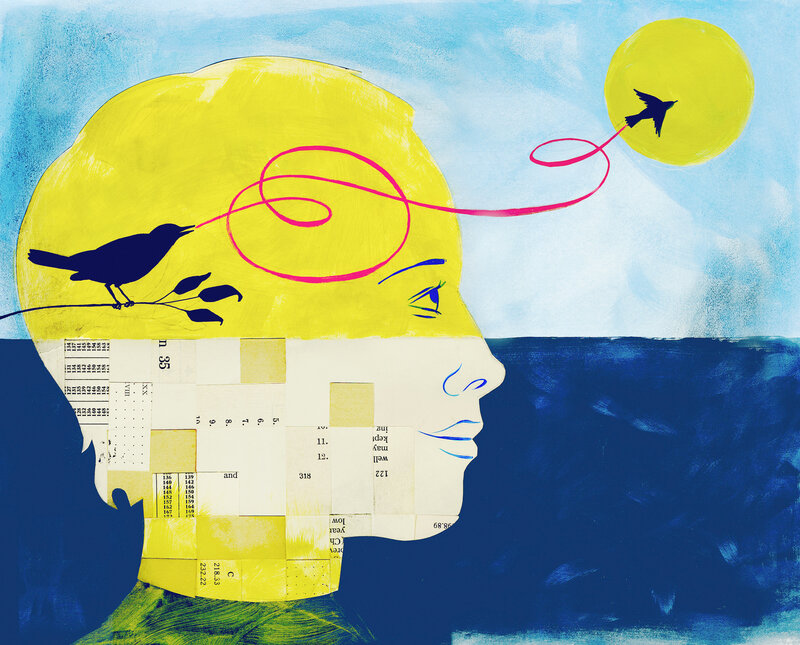 NPR has delivered another great author interview with a psychologist who has written a book about the teenage brain. Dr. Frances Jensen has updated research in the book, The Teenage Brain: A Neuroscientist's Survival Guide to Raising Adolescents and Young Adults.
The interview deals with addiction, binge drinking and marijuana use and its impact on the teenage brain, the effects of constant access to stimuli, and brain myelination.
There are many neuro books out there, but this one is highlighting recent research to assist in our understanding of those in our charge.
The NPR interview can be found at this link:
http://www.npr.org/blogs/health/2015/01/28/381622350/why-teens-are-impulsive-addiction-prone-and-should-protect-their-brains
The book can be purchased here:
posted by Chuck Schallhorn
Thursday, February 5, 2015
Your Brain, Love, and Addiction
I recently ran across this article on love that compared being in love to addictions. They linked to the Rachael Leigh Cook, "This is your brain on drugs" commercial, which was one of my all-teim favorites. This post was an excuse to share the video.
Here is the article: https://www.psychologytoday.com/blog/love-and-sex-in-the-digital-age/201501/is-your-brain-love
I suspect your students might like or hate this, depending upon their current romantic state.
posted by Chuck Schallhorn
Here is the article: https://www.psychologytoday.com/blog/love-and-sex-in-the-digital-age/201501/is-your-brain-love
I suspect your students might like or hate this, depending upon their current romantic state.
posted by Chuck Schallhorn
Thursday, November 20, 2014
The Brain From Top to Bottom: McGill University

Kent first posted about this site back in 2009, but it has been updated and is worth a visit for those teaching or learning neuroscience. For an amazingly detailed site that has various levels and topics dealing with neuroscience, it would likely take hours (or a full-year course) to utilize all its content.
So check out: http://thebrain.mcgill.ca/avance.php if you would like to have a great resource for your kids doing research (or for you as well).
posted by Chuck Schallhorn
Thursday, October 9, 2014
Your Brain on Games (Video/Phone)

This is Your Brain on Candy Crush
http://www.npr.org/blogs/money/2014/10/09/354649902/this-is-your-brain-on-candy-crush
Nir Ayal, one of the interviewees, wrote a book, Hooked: How to Build Habit-Forming Products
 which comes out next month talks about this topic in more detail.
posted by Chuck Schallhorn
Saturday, October 5, 2013
The Child Brain: An Infographic
They say that the first step to solving a problem is admitting that you have one. I seem to have a thing for infographics. Not sure why, but I do. I found this one this morning, tweeted it and it got several retweets and favorites. Figured I'd better share with everyone. It's got some amazing facts and really cool graphics.
The original graphic can be found here: http://www.graphs.net/201310/child-brain-development.html

The original graphic can be found here: http://www.graphs.net/201310/child-brain-development.html

Tuesday, October 1, 2013
Brain Internet Search and Discover
Below is an assignment I do when I can get a computer lab for my regular psychology class. Our school of 3000 has only two labs. I love each of these sites--I use this assignment as a springboard into the brain and neuroscience after my students have become familiar with the brain (after about a week or two). It is NOT a webquest, but rather a search and discover (my term, nothing official). I checked all the links this morning and they all work. Many of my students are also poor and do not have computers and/or internet access at home to complete the assignment.
We have an alternating block schedule. Given that, I added the last two sites on optical illusions for the students who work more quickly and give them something that could be endlessly entertaining. My biggest goal is exposure to the possibilities of the brain and topics that interest them--that's why I began with sleep ;)
posted by Chuck Schallhorn
We have an alternating block schedule. Given that, I added the last two sites on optical illusions for the students who work more quickly and give them something that could be endlessly entertaining. My biggest goal is exposure to the possibilities of the brain and topics that interest them--that's why I began with sleep ;)
posted by Chuck Schallhorn
Mr. Schallhorn's Psychology/Brain Name Per
Internet Search and Discover (rev. 10/13)
|
Follow ALL
Directions:
·
Today's exercise is designed to take your through
some excellent sites about the brain and help you review and understand the
ideas for the unit.
·
Complete each section before moving on to the next
one.
·
Go to my
web site to access all these specific sites without having to type in each
link.
|
Site 1: The Teenage Brain: Why We Sleep
|
|
Site 2: The Brain in 3-D Form-- http://www.g2conline.org/
--once here, look to the right and view the 3-D brain section
This link shows the brain in
3-Dimensional form.
Play with the simulation to
get a feel for the brain and how parts relate to one another. Do this and read the descriptions at the
right of the page. Spend about five
minutes doing this. Name three things
you learned about the brain by using this tool.
1.
2.
3.
|
|
This
link explains in detail and great color just how science can scan the brain. What
does each do and HOW does it achieve its measurement of the brain.
|
||||||
Site 4: Brains in the News--http://faculty.washington.edu/chudler/inthenews.html
Neuroscience
for Kids--in the News
Choose
one of the articles and give a four-six sentence summary of its contents.
|
Site 5: Brain Games
Neuroscience
for Kids--Neuroscience Games
Choose
a game that is for kids in high school. Play it and report back as to what
you learned from it.
|
Site 6: Topic of Your Choice
Scan
the article titles on this page. Make a list of topics (at least 8x) the magazine is currently
offering.
|
|
Site 7: Medical News
Today Article—Search this site for articles dealing with the
brain (easy search box at the top).
Choose and article. Choose one and create a mini-report (summarize in
4-6 sentences on the article topics about which you read). http://www.medicalnewstoday.com/
|
|
Site 8: Sheep Brain Dissection
This link takes you through
the dissection of a sheep brain and the connection to that of a human
brain. Please take key notes (at least
8) that are important to understand the brain.
|
|
Site 9: Society for Neuroscience: http://www.sfn.org/index.aspx?pagename=brainfacts
Take a look at the
page. Choose one of the topics under
“main page.” Read that section and
summarize it here.
|
|
Optical Illusions Sites
Go
to the following links and experience the world of optical illusions. What do
you see—what illusions grab your attention and why
1.
2.
3.
What is happening to you
when you view these illusions? What is
your reaction to it?
|
Monday, March 11, 2013
Brain Awareness Week March 11-17, 2013

DANA.org
http://www.dana.org/brainweek/
BrainFacts.org
http://www.sfn.org/baw/
Neuroscience for Kids
http://faculty.washington.edu/chudler/baw.html
Brain Awareness on Facebook
https://www.facebook.com/BrainAwarenessWeek
The Brain Institute at University of Utah
http://brain.utah.edu/communities/sfn-intermountain/brain-awareness-week.php
Aspen Brain Forum
http://aspenbrainforum.com/brain-awareness-week.html
This last site has many links to other sites and activities
Enjoy your brain awareness week whether you honor brains this week or another time during your respective school years.
Posted by Chuck Schallhorn
Wednesday, September 26, 2012
3D Brain App--Great Review Tool
 We've highlighted the Genes to Cognition website before, but one of their most interested and fun segments has been made into a phone/tablet app.
The description from the iTunes page with the app says this,"Use your touch screen to rotate and zoom around 29 interactive structures. Discover how each brain region functions, what happens when it is injured, and how it is involved in mental illness. Each detailed structure comes with information on functions, disorders, brain damage, case studies, and links to modern research."
This is what I sent my students today.
If you have an iPhone or iPad, check out this app--it is excellent for seeing the brain and reviewing the brain parts. The app is free.
The Android/Windows 7 phones have it here:
posted by Chuck Schallhorn
Monday, November 7, 2011
History of the Brain: A New BBC Radio Series

The BBC 4 Radio Site
Episode 1--A Hole in the Head
If you explore the site, there are also other links to some great brain education items.
posted by Chuck Schallhorn
Sunday, September 18, 2011
Infant Brains and Teenage Brains--Two New Articles
This weekend has been a boon for neuroscience articles. Below are a couple of articles that we could use in our classes related to development and the human brain.
1) National Geographic--The Teenage Brain
 Printable version of the article
The article begins by asking rhetorical questions about our teens and their decision making process. The article also deals with a cross-cultural/historical mention of adolescence and its tempering effect on behavior. The article includes an excellent overview of brain development, including myelination. Very nice article--but what else would one expect from National Geographic.
2) The second article comes from NPR--the article describes a book and interview with the authors of Welcome to Your Child's Brain with an article entitled "How to Help Your Child's Brain Grow Up Strong."
The NPR article also discusses brain development, but highlights what infants are capable of which is considerably more than previously thought. Help a child develop self-control is a highlight of both the book and article. It's another good read. Also, in the left column of the article are links to other brain books and authors.
posted by Chuck Schallhorn
1) National Geographic--The Teenage Brain

The article begins by asking rhetorical questions about our teens and their decision making process. The article also deals with a cross-cultural/historical mention of adolescence and its tempering effect on behavior. The article includes an excellent overview of brain development, including myelination. Very nice article--but what else would one expect from National Geographic.
2) The second article comes from NPR--the article describes a book and interview with the authors of Welcome to Your Child's Brain with an article entitled "How to Help Your Child's Brain Grow Up Strong."
The NPR article also discusses brain development, but highlights what infants are capable of which is considerably more than previously thought. Help a child develop self-control is a highlight of both the book and article. It's another good read. Also, in the left column of the article are links to other brain books and authors.
posted by Chuck Schallhorn
Saturday, July 23, 2011
Migraines

Today, while on facebook, PBS offered this little article about migraines. It also had a wonderful little graphic--I love how artists are increasingly making incredible looking graphics related to the body and brain.

Posted by Chuck Schallhorn
Friday, July 22, 2011
Neuroscientist David Eagleman on Colbert Report on 7/21/11
I was catching up on some television watching when I discovered this little nugget. Dr. David Eagleman has written the book, Incognito: The Secret Lives of the Brain which examines the various processes that occur without the conscious mind being aware. The reviews on Amazon are mixed, but for those of us who are not in the neuroscience field, it could be a good read. In the interview, he comes across as a younger, cool, hip and bright neuroscientist. He does not come off all like the stereotypical stodgy scientist image. It's a short, fun interview. Who knows, it may just make a student interested in the brain.
posted by Chuck Schallhorn
which examines the various processes that occur without the conscious mind being aware. The reviews on Amazon are mixed, but for those of us who are not in the neuroscience field, it could be a good read. In the interview, he comes across as a younger, cool, hip and bright neuroscientist. He does not come off all like the stereotypical stodgy scientist image. It's a short, fun interview. Who knows, it may just make a student interested in the brain.| The Colbert Report | Mon - Thurs 11:30pm / 10:30c | |||
| David Eagleman | ||||
| ||||
posted by Chuck Schallhorn
Tuesday, May 10, 2011
National Geographics Brain Page
 Believe it or not, the National Geographic has part of their website devoted to the human body. I (Kent) will leave the sections on the digestive system, heart, skin and lungs to our colleagues in biology and concentrate on the section devoted to the brain. Go to http://science.nationalgeographic.com/science/health-and-human-body/human-body/brain-article.html for more information.
In addition, make sure to check out a short, but fantastic slide show at http://science.nationalgeographic.com/science/photos/brain/?source=A-to-Z as well as an article on sleep deprivation in rats at http://news.nationalgeographic.com/news/2011/04/110427-sleep-deprived-brains-nature-science-health-rat-asleep-awake/
Saturday, October 23, 2010
Brain Scans as Art

The artist, Elizabeth Jameson has taken brain scans and made art from them. Check out her work here.
posted by Chuck Schallhorn
Subscribe to:
Posts (Atom)
