- Great interview of Judith Rich Harris by The Frontal Cortex's Jonah Lehrer. Harris was the textbook editor who put the psychology world in a tizzy in 1998 with the release of her book The Nurture Assumption, which challenged the standing belief that parents play a major role in the shaping of their children's personality. Wrong, said Harris, and she pointed out the flaws in a number of research studies to back her assertions. The book is now out in an expanded edition and is a definite must-read for psychology teachers.
- Jonah Lehrer also writes about what we can learn from how the brains of babies work. The article features psychologist Allison Gopnik who has a forthcoming book called The Philosophical Baby (with its own YouTube intro here).
- NPR's Robert Kulwich does a piece on how language shapes thinking.
- The Obama administration is using applied psychology to get people to want the "change [they] can believe in." Vaughan at Mind Hacks wonders where the skepticism is to this approach.
- Discover Magazine looks at The Big Similarities & Quirky Differences Between Our Left and Right Brains.
- Is sex addiction an excuse, not a disease?
- Nature looks at how the MRI is changing the way we view the brain.
- Has the APA been slow to act when its members have been involved in torture?
- Epilepsy not as a storm in the brain, but an anti-storm?
- New Scientist looks at choice blindness -- how do we know what we want?
- An awesome (but long, naturally) look by the New Yorker at how drugs like Adderall are being used off-label to help non-ADHD people do better than before.
- A lecture on the connection between the fMRI and the four humours (!).
Showing posts with label developmental psychology. Show all posts
Sunday, April 26, 2009
Psych in the news
Saturday, March 7, 2009
Psych in the news
Holy cow! I was busy with classes this week and wow, did the news pile up! There's plenty for two entries, so for now we'll start with these links:
A case of fugue in New York City. (NY Times) Some skepticism here. (New York Magazine)
Portrayals of amnesia in popular movies. (Science Blogs)
Do forward-facing strollers affect babies' development? (NYT)
The role of the brain in sexual interest. (Science Daily)
TV viewing among tiny tots? Not bad for them but not good either. (NYT)
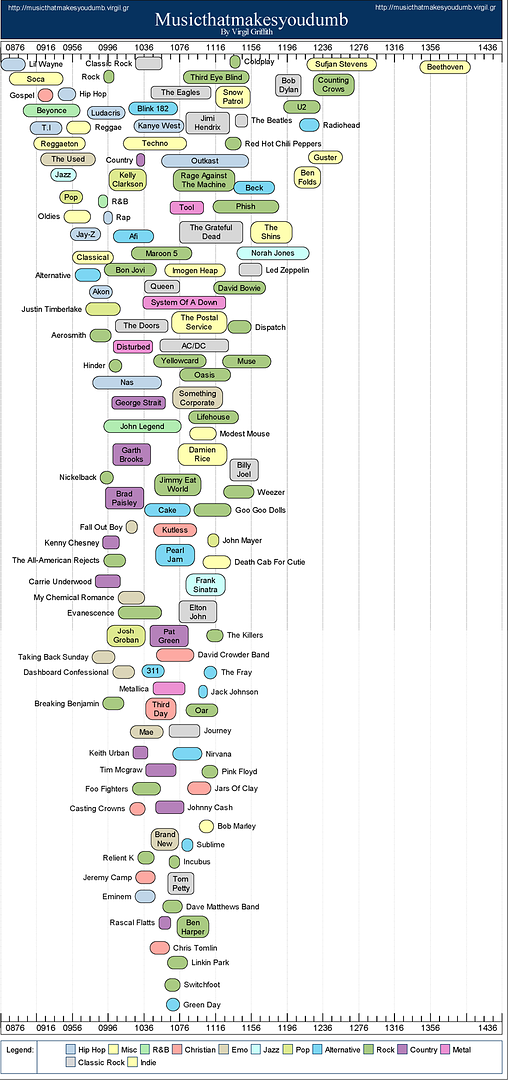
Beethoven vs. Lil Wayne? One guy compares the musical tastes of college kids with their SAT scores. (Digits/WSJ)
How the social skills of babies help make others want to care for them. (NYT)
Psychologists vs. economists: should you reward students for academic performance? (NYT)
Labels:
ADHD,
amnesia,
behavior,
circadian rhythms,
developmental psychology,
evolution,
fugue,
music,
rewards,
sexual motivation,
sleep,
television
Sunday, March 1, 2009
Psych in the news
Beauty affects men's and women's brains differently. (Wired)
Researchers in Montreal report that people who were abused or neglected as children showed genetic alterations that likely made them more biologically sensitive to stress. (NY Times)
A study published this month in the journal Pediatrics studied the links between recess and classroom behavior among about 11,000 children age 8 and 9. Those who had more than 15 minutes of recess a day showed better behavior in class than those who had little or none. (NYT)
Low levels of Vitamin D may be associted with an increased risk for dementia. (NYT)
Finally some good news for your slackers: "People may doodle as a strategy to help themselves concentrate," says a researcher in a new study. (Wired)
Labels:
abuse,
brain,
cognitive science,
developmental psychology,
gender,
health,
stress
Wednesday, February 11, 2009
Psych in the news
February 11
A new study has found that people grossly underestimate the length of these lines -- a finding which implies that we’re all misjudging distances as we drive, and are driving too fast as a result. (Science Daily)
A new procedure is attracting increasing attention because it allows people to move prosthetic arms more automatically than ever before, simply by using rewired nerves and their brains. (NYT)
Two groups have put together a stylebook to guide media professionals through the minefield of politically correct and politically incorrect ways of identifying and portraying the elderly. (NYT)
In recent years, scientists have started arriving at more counterintuitive insights about the circumstances that court choking. Well-meaning experts often advise performers to take their time—slowing down delivery, the thinking goes, helps to quell nervousness—but it is actually better just to get on with things if you are well rehearsed. (Scientific American)
A new study suggests that the location of a recollection in the brain varies based on how old that recollection is. (Scientific American)
Labels:
brain,
developmental psychology,
language,
memory,
motivation,
neurons,
psychophysics,
research
Subscribe to:
Posts (Atom)