Friday, October 17, 2014

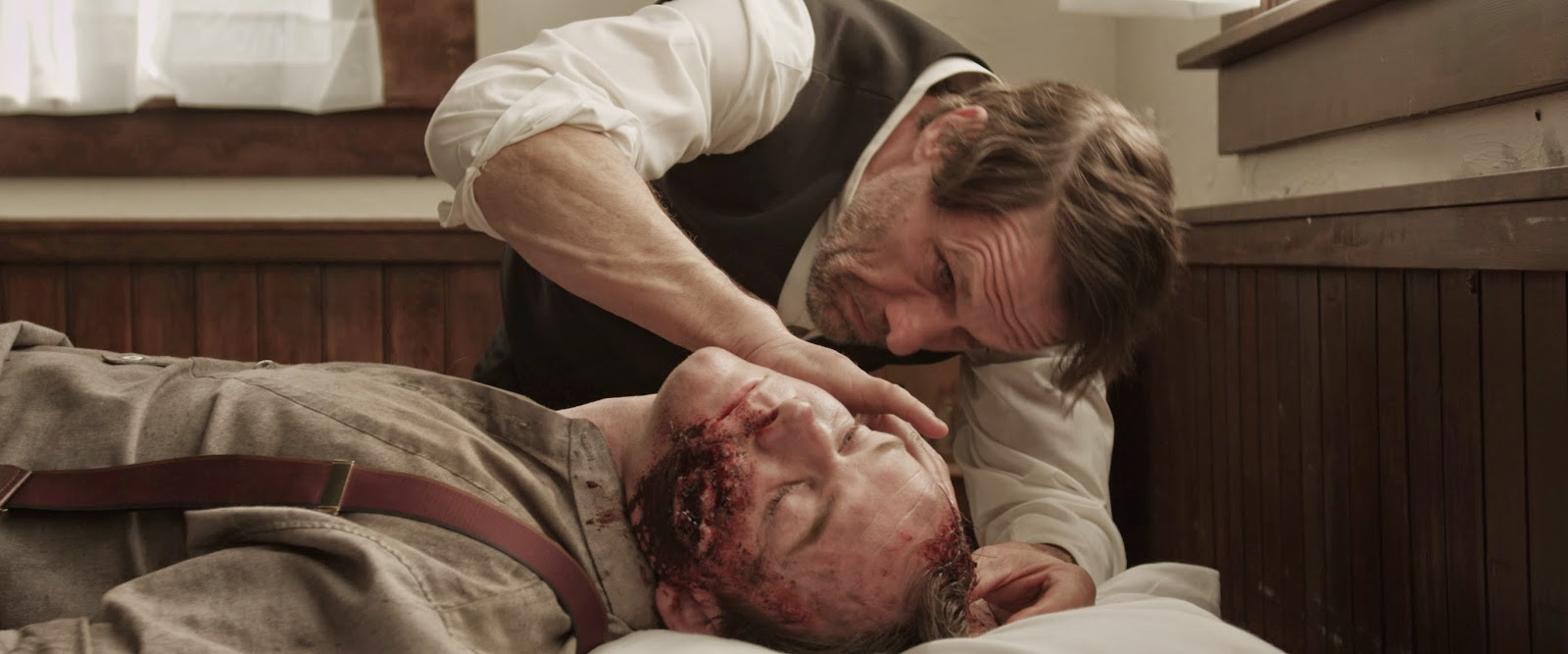
Infographic on Hearing and Decibels

Was doing some other research/demo for students and discovered this little gem.


The actual infographic can be found at this link:
http://dailyinfographic.com/wp-content/uploads/2012/02/hearing-loss-infographic1.jpg

The entire article from DailyInfographic can be found here:
http://dailyinfographic.com/hearing-loss-infographic-2/hearing-loss-infographic-3


posted by Chuck Schallhorn

Tuesday, October 14, 2014

How Does Pain and Pain-Relievers Work

I am sitting at a volleyball match with my iPad and discovered this wonderful video. I cannot find a link to embed it, so here it is.  It's short, animated and talks about brain cells, nocireceptors, prostaglandins and more physiology.  In short, great for psych or ap psych.

Since it is a TedEd lesson, there are more links for you to check out and have your kids look deeper into the subject. 

http://ed.ted.com/lessons/how-do-pain-relievers-work#digdeeper

I will update the tags and links with pictures when I get to a regular computer. 

Post by Chuck Schallhorn 


Monday, October 13, 2014

Sleeping and Twitching--Why Do We Twitch??

I was doing some other research and shared this find with a couple students doing their own research on sleep.  This has information about the process of neurotransmitters and sleep I was not familiar with.  Great Stuff.
http://news.discovery.com/human/videos/why-do-we-twitch-before-falling-asleep-video-141013.htm


posted by Chuck Schallhorn

Thursday, October 9, 2014

Your Brain on Games (Video/Phone)

I was listening to NPR this morning on the way to work.  I heard this story about video games and how game designers use behavioral scientists to get people to use, keep using, and eventually purchase within the game.  They talked about consumer psychology, economics, and the reporters desire to create a game about making toast.  So much fun and great awareness of the human psyche. Great source of insight for both teachers and students.  I arrived at school excited to share this information.

This is Your Brain on Candy Crush
http://www.npr.org/blogs/money/2014/10/09/354649902/this-is-your-brain-on-candy-crush


Nir Ayal, one of the interviewees, wrote a book, Hooked: How to Build Habit-Forming Products which comes out next month talks about this topic in more detail.

posted by Chuck Schallhorn

Monday, October 6, 2014

Crash Course Psychology videos - with reflection questions!


Does anyone use the Crash Course Psychology videos? I'm pretty impressed with them:

One limitation is that they move pretty fast, which gave me the idea that the videos may benefit from reflection/ "check for understanding" questions during the video. I learned about an online resource called "EdPuzzle" which allows you to add questions to a video (and you can get student responses to questions, etc.) I'm slowly working my way through the videos, adding questions. 

Video 1: Intro (history and perspectives) https://edpuzzle.com/media/54218d04db8386321980926e
Video 3: Neural structure and function https://edpuzzle.com/media/542ec6f85953dabf044308c7
Video 4: Brain structure and function https://edpuzzle.com/media/543029b1478febe80a677bb9

I hope these are useful to someone - I think I'll keep working my way through them, and I'll add the links here as I get them done (bookmark this post if you'd like to keep track of it?) Please respond in the comments section if you use these Edpuzzle videos or have other ideas about how to use the Crash Course videos.
posted by Rob McEntarffer

Friday, September 19, 2014

IToP!

The 15th annual Iowa Teachers of Psychology conference will be held Friday, November 7, 2014 at Central College in Pella, IA.  IToP welcomes psychology teachers from graduate programs, four-year colleges, community colleges, and high schools as well as graduate teaching assistants and secondary education majors interested in psych.  All psychology instructors, researchers, and students are cordially invited to attend!

This year’s invited speakers are Dr. David Myers, Professor of Psychology at Hope College, and Dr. Douglas Gentile, Associate Professor of Psychology at Iowa State University.  Dr. Myers will address the psychology of hearing and hearing loss and Dr. Gentile will speak about the effects of media violence.

For more information about registration ($35 for faculty, deadline 10/22), speakers, and proposal submissions for teaching demonstrations and roundtable discussions, please visit www.itopconference.com 

Also, IToP organizers are always looking for teaching demos or topic suggestions for our teaching exchange  roundtables - submit ideas using this online form


posted by Rob McEntarffer

Texas and AP US History

This is definitely a "non-psychology post," so please just scroll past if you are not at all interested in Advanced Placement courses and "politics."

If you're still reading this, I'd love to hear your thoughts on the recent "history wars" involving the revamp of the AP US History course. I'm a bit surprised (naively, probably) about the controversy surrounding US history. I thought the news stories would die down after a while, but recently the Texas Board of Education (not a local district board - the STATE board) voted that students "not be taught to the national test."

Texas Moves To Override New AP History Course

http://talkingpointsmemo.com/news/texas-moves-to-override-ap-exam

Why post this here on TeachingHighSchoolPsychology? The answer might be "you shouldn't" but there are at least a couple issues that are relevant to psychology teachers (especially AP Psychology teachers):
  • This may be another example of policy makers misunderstanding assessment score use. Assessments, like the AP US and Psychology exams, are built for a specific purpose. In this case, they are supposed to measure whether or not high school students acquired the knowledge/skills that college students do in their introductory courses. College Board does a lot of work trying to measure whether or not the tests do this ("comparability studies"). Test validity is a score USE issue, not an aspect of a test. If the Texas school board objects to the skills/knowledge measured on the AP US History test, are they objecting to how history is taught in their state funded colleges? It's much easier to pick on (and control) high school teachers and students...
  • Eventually AP Psychology will get a "re-vamp" and this controversy makes me wonder what we are facing in that process. Who gets to decide what "appropriate" skills/knowledge are for an advanced placement student? Will policy-makers assume expertise and authority in psychology as they are doing in history? 
My quick ending, emotional summation: Ugh.


posted by Rob McEntarffer

Tuesday, September 16, 2014

Indiana High School Psychology Teachers annual conference!

The Indiana High School Psychology Teachers Association’s 16th annual conference is right around the corner!

This year’s conference will be held in the IUPUI Campus Center (Room 405) from 9:00 AM to 3:00 PM on Friday, October 3rd. It is open to all high school psychology teachers within the state of Indiana.

Date: Friday, October 3, 2014
Time 9am-3pm
Location: Indiana University-Purdue University Indianapolis
Registration cost: $30 (registration deadline September 22)
Registration Link

Details: Come and enjoy the opportunity to meet and network with your teaching colleagues at IUPUI in an atmosphere designed to:
  • sharpen your pedagogical skills,
  • enable you to share your teaching techniques with your peers, and
  • develop collegial relationships with your fellow psychology teachers.
If you are willing to present a classroom demonstration or share an online resource at the conference, please send an e-mail message to Amanda Vanderbur at avanderbur@zcs.k12.in.us.


posted by Rob McEntarffer

Monday, September 15, 2014

UTOPSS UTOPSS UTOPSS!!!

The annual Utah-Teachers of Psychology in Secondary Schools (UTOPSS) Fall Conference is coming up soon!  There is still time to register.

Who: All high school Psychology teachers are invited to attend! Please invite any new psychology faculty on your staff or in your district.

Where: Westminster College; 1840 S. 1300 E., SLC, UT; Gore Auditorium, room 112

What: Come for a full day of learning and collaboration!

When: Friday, October 3, 2014 from 8:00 am to 3:30 pm

Why: Come and get reenergized for the new school year! There is a wonderful day planned. Look for the bios of our guest speakers online at www.westminstercollege.edu/UTOPSS.

· Rethinking Reform: Positive Psychology and Education
   Randy Ernst–Lincoln Public Schools, NE
· Experiential Metaphors in the Psychology Classroom
Dr. Ellen Behrens–Westminster College
· Competency-Based Education in Psychology Courses
Dr. Ellen Behrens & Dr. Jen Simonds- Westminster College
· Participant Idea Share
Annette Nielsen-Woods Cross High School
· “What I Wished I Had Learned in High School”
   Student panel-Westminster College

How: Go to www.westminstercollege.edu/UTOPSS to register and pay conference dues. Registration is $50.00 and is due September 26 (after that date, registration is $60.00).

If you have any questions, please contact me at kwhitlock@dsdmail.net.


posted by Rob McEntarffer


Saturday, September 13, 2014

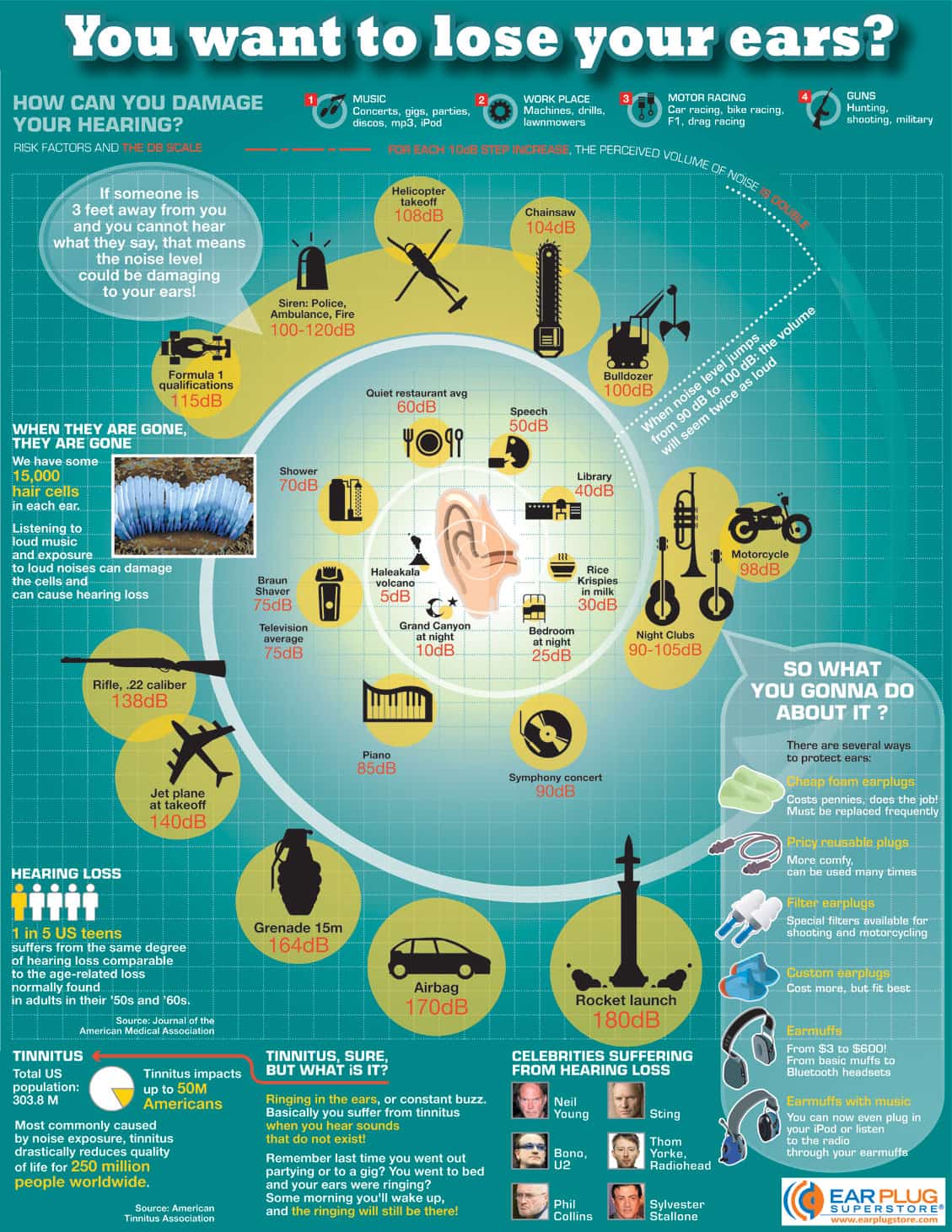
A new Phineas Gage movie


Today marks the 166th anniversary of Phineas Gage's horrific accident while working on a railroad crew in Cavendish, Vermont. I am sure you are all familiar with what happened that day, and if you are a longtime reader of the blog, surely you know that I am a wee bit obsessed with this story.

I am delighted to learn of the new movie Gage, which focuses on the interactions between Gage and his physician, Dr. John Martyn Harlow. I contacted co-producer Alyssa Roehrenbeck to learn more about the film, and this is what she shared with me:
The film really focuses on the relationship between Phineas and his Doctor, and showcases how Dr. Harlow sees the world reacting to Phineas (now that he is no longer Phineas according to society). Instead of focusing on changes in Phineas per se, it depicts the change in attitude towards him ... We've tried to remain as factually true to the real story of Gage as we can, but also know that in order to make a film, there has to be a "story" - so we've worked to imagine the relationship with Harlow and how that came to be and flourished, as well as how Gage may or may not have behaved after the accident. 

What makes this even more fascinating to me is that Roehrenbeck told me that director Keith Wilhelm Kopp is an Army veteran, and is focusing on the story of Phineas Gage as a victim of a traumatic brain injury as many modern day soldiers are. Kopp was inspired by witnessing some of his buddies in similar circumstances as Gage. And this is where the story takes a more interesting turn:
Ultimately, we are looking for the funding to take the film we already have and add to it with interviews from neuroscientists, psychologists and soldiers returning from the middle east to make a docu-drama about traumatic brain injury... Interestingly, we were sponsored by the United States Veteran's Artist Alliance (http://www.usvaa.org/) and wound up with over 50% of cast and crew also being veterans. We'd love to air the docu-drama on Discovery Channel, BBC, or even PBS.  We are in works to plan other screenings at colleges in the UK and the states, and also have several film festival submissions in, and are just waiting to hear if we got in. 
Below is the film's trailer (or use this Vimeo link), then share your thoughts in the comments below. For more information the film's Facebook page. Thanks to Alyssa Roehrenbeck for sharing this information with me, and to Keith Wilhelm Kopp for making this film.

GAGE TRAILER from Mike Marchlewski on Vimeo.


--posted by Steve