Showing posts with label behavior. Show all posts

Monday, October 26, 2009

Little Albert: Found!


I haven't read the American Psychologist article about this yet, but this summary from the Mind Hacks blog summarizes the story pretty well: Dr. Hall Beck from Appalachian State University has been trying to track down the identity of "Little Albert" for 7 seven years, and he succeeded! It sounds like the article describes in detail how he used historical records, photographs, and facial recognition experts to figure out the true identity of the baby Watson and Rayner worked with all those years ago. Spoiler alert: don't read the end of the end of the blog post if you want to read the original and find out Albert's fate.

Also, Mary Cover Jones published an article years after the Little Albert study on using classical conditioning to "cure" a child of fears: A Laboratory Study of Fear: The Case of Peter.

Wednesday, March 11, 2009

Psych in the news

Seriously? There is so much news flying by I'll never catch up. Today's installment is in fast forward with a minimum amount of words, no credits and crammed in every which way.

Calculating very rare events * Do psychologists still use Rorschach tests? * The mental heath of Iraqis after years of war * How ads enhance TV watching * The flexibility of dream interpretation * Does stress cause gray hair? * Older dads linked to lower IQ kids * Single sex classes in public schools * Placebos in teen depression studies * Brain differences between the religious and non-religious (and hear the NPR report) * Psychology and neuroscience on Twitter *

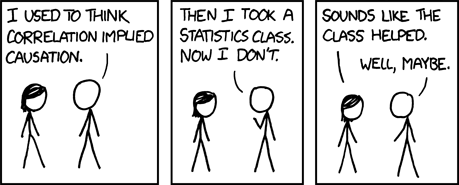
Two longer ones to end on: shark attacks are dropping and the economy's to blame! (Does anyone else use the correlation does not equal causation example of shark attacks and ice cream sales? So now shark attacks and the economy are correlated?)


Finally, a WARNING: this article in the Washington Post magazine on children dying in cars accidentally because they were forgotten by their parents is difficult to read (or at least it was for me -- there are parts I just had to skim through). I add it only because of the questions it raises about memory, inattention, distraction and people being off of their routines which leads to forgetting. There's also a sidebar on ways to prevent these tragedies -- sure, there's some technology, but there are also the simple things like putting something that you need for work (ID badge, briefcase, keys, etc.) in the back with the child. Kids and Cars also has other devices.

Saturday, March 7, 2009

Psych in the news


Holy cow! I was busy with classes this week and wow, did the news pile up! There's plenty for two entries, so for now we'll start with these links:

A case of fugue in New York City. (NY Times) Some skepticism here. (New York Magazine)

Portrayals of amnesia in popular movies. (Science Blogs)

Do forward-facing strollers affect babies' development? (NYT)

Night shift makes metabolism go haywire. (Wired)

The role of the brain in sexual interest. (Science Daily)

TV viewing among tiny tots? Not bad for them but not good either. (NYT)

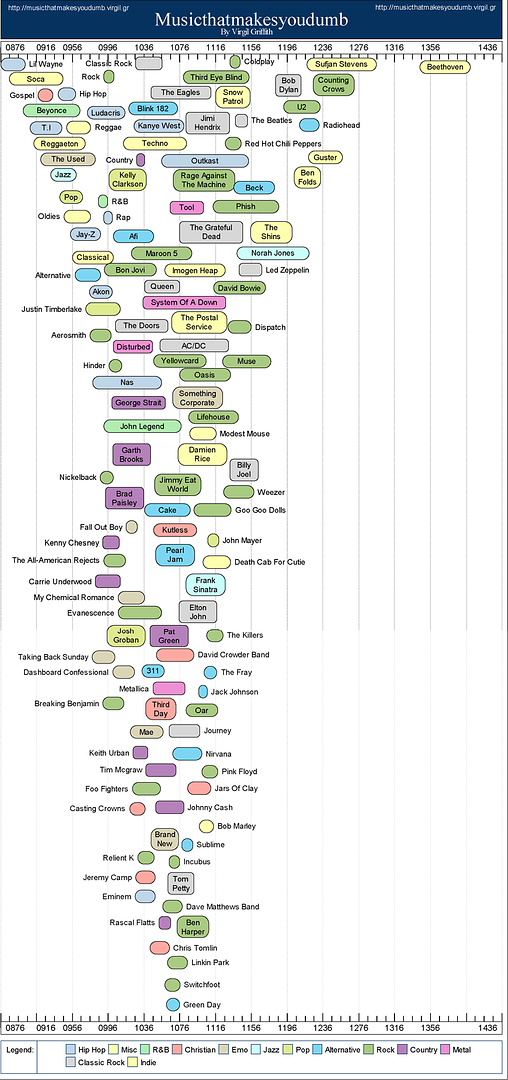
Beethoven vs. Lil Wayne? One guy compares the musical tastes of college kids with their SAT scores. (Digits/WSJ)

Are kids with ADHD really just sleep deprived? (Science Daily)

How the social skills of babies help make others want to care for them. (NYT)

Psychologists vs. economists: should you reward students for academic performance? (NYT)

Tuesday, February 17, 2009

Podcast-Radiolab


Whenever I have to drive, I make sure I have my iPod with me. While NPR is my only radio station, its programming is not always what I want to hear at the time. With that in mind, and going back to my childhood listening to CBS Radio Mystery Theater (back when AM radio was used for more than talk radio), I now listen to the best radio show around.

Robert Krulwich and Jad Abumrad are the hosts of each show, and they create a movie for the ears. In the words of the website, "Radiolab is a show about curiosity. Each episode is an investigation - a patchwork of people, sounds, stories all centered around one big idea." This means that topics will likely include psychological topics--memory, curiosity, deception, music, the brain, nostalgia, tickling, coincidence, morality, science, parasites (and effects on behavior). Every episode is seemingly a wonderful interdisciplinary show that feeds the mind.

http://www.wnyc.org/shows/radiolab
http://blogs.wnyc.org/radiolab/?utm_source=links&utm_medium=hp&utm_campaign=radiolab

One recent show was about the Obama Effect. The show was about people's perceptions related to their scores on intelligence tests (or some other term that was used). Results included differences in test scores when minorities had different beliefs about what the test was about. It really challenged the notion of the efficacy of intelligence tests.

In short, it is my favorite radio show and I highly recommend it. Please try one episode and you'll see. Enjoy!