Showing posts with label 01 History and Approaches. Show all posts

Thursday, November 10, 2016

Today is Harry Kirke Wolfe's birthday! Teaching hero! http://teachpsych.org/page-1562856


posted by Rob McEntarffer

Friday, January 15, 2016

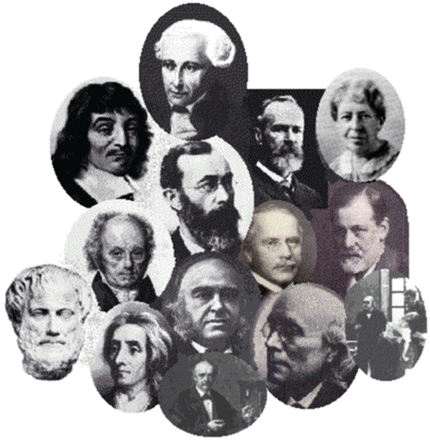
The History of Psychology Rating Game

Christopher Green (who provides us with the fantastic resource "Classics in the History of Psychology") and Shane Martin developed a game we can all play!

Here's Christopher's description of the game:

"Play is extremely simple: The player is shown a pair of significant individuals from the past and asked to click on the name of the person who had the greatest impact on the psychology. If the player needs to refresh his/her knowledge of the figures, there is a short description of their important career highlights, along with a link to their Wikipedia entry. As soon as the player clicks on one of the two names, s/he is shown a new pair to choose from.

Players can play the game for as long as they like, as often as they like, whenever they like. They can quit at any time (though they might find it a little addictive). At the bottom of the page, they will find "top ten” lists that have been compiled from the tens of thousands of choices that they and others have made. (Click on the “Ratings” menu tab and they’ll find the complete list of ranking, along with some specialized top ten lists, including one for women psychologists.)

As well as a game, this is also a research project for us: the PsyBorgs Digital History of Psychology Laboratory at York University in Toronto. When starting the game for the first time, the player is asked three optional demographic questions, and there is a consent form to be “ticked” if the player is willing to allow his/her data to be anonymously included in the research project"


 I played for a while and found it addictive! I ended up skipping many pairings b/c I wasn't familiar with either name, but I enjoyed seeing the match ups, and the "rankings" at the bottom are fascinating (complete list of rankings).

(NOTE: If your district has rules about students participating in research studies, you may want to tell them to NOT click the box to participate in the study and give consent)

Psychology's EloRater Game


posted by Rob McEntarffer

Sunday, September 13, 2015

Teaching Wundt's Research

Wilhelm Maximilian Wundt
I'm not a huge fan of TEACHING the history of psychology in the first days of class. There's no frame of reference for students and it just seems confusing to them. Structuralism? Functionalism? What? 

I recently came across this on Twitter and was very intrigued. It is a Psych Inquiry by Connie Varhagan of the University of Alberta. It is about a ten minute activity that can be used in explanation with Wundt's initial study on consciousness. It looks to test sensation and sensation/perception with cognition. The kids easily see the difference in their scores and hopefully have an "aha" moment.

Try it out here! http://www.gmw.rug.nl/~psychinquiry/01/reaction_times/reaction_times.swf

Has anyone used this in their psychology course to help teach the early foundations of psychology?

- Posted by Amy Ramponi 


Friday, January 23, 2015

Perspectives in Psychology Practice Questions

When it comes to perspectives, my students for some reason, seem to have difficulty.  Sometimes I will make the unit at the beginning of the semester for regular psych.  Sometimes I will incorporate and integrate the ideas throughout the course and summarize after we've done some units.

Below is a sheet that I created to help my kids practice.  After going over the main perspectives, reading in and out of the text, outside outlines from Britain, a chart that Drew Appleby created and more, I use this sheet to see how well they understand the major points of view--psychoanalytic, behavioral, cognitive, humanistic, biological, and sociocultural (my book is from 2003). I have them do it as homework, but we go over it as a class and I help them identify key words in the clues.

A Word Version Linked Here
Key to Doc-Word Version


Perspectives Practice Questions                   Name                                                                           Block              

Below are a set of scenarios and ideas that a psychologist from a particular perspective might use.  Choose the best perspective of the following:  Psychodynamic, Behavioral/Learning, Cognitive, Humanistic, Biological, Socio-cultural/social psychological.
Scenario
Perspective
1.      When looking at why a person chooses to behave a particular way, I will examine how they think and process information.

2.      When looking at why a person chooses to behave a particular way, I will examine what happened in childhood and what kinds of issues the patient is fixated on.

3.      When looking at why a person chooses to behave a particular way, I will examine the brain chemistry and hormonal issues of the person.

4.      When looking at why a person chooses to behave a particular way, I will examine if the behavior helps the person reach his/her own potential.

5.      When looking at why a person chooses to behave a particular way, I will examine what consequences (pleasant or unpleasant) the person experienced.

6.      Examining how a person’s gender will affect their actions.

7.      The unconscious mind influences everything we do.

8.      How do people remember and forget?

9.      Depression is influenced by genetic predisposition and brain chemistry.

10.  Depression is influenced by how we perceive the work and how our thoughts can betray us.

11.  Depression is the result of not being able to express our anger toward those at whom we are angry, so we “swallow” it, leading to depression.

12.  Depression is the result of the depressive behavior being reinforced by important others in our lives.

13.  Depression is caused when an individual has a specific self-concept, but important others in our lives have different views of who we are and what we should be.

14.  When we watch important people in our lives being depressed, we imitate it.

15.  Recent research has found that being a part of any ethnic group changes the way our brains are wired.  This has two answers.

16.  Examining the structures of the brains of schizophrenic twins and comparing them to their healthy twins.

17.  What makes people watch a commercial repeatedly, then go out and buy a product?  There are multiple responses here.

18.  We are constantly trying to become who we are.  Our lives are a process of growth.

19.  There seem to be a few things that motivate people:  hunger, thirst, and sex.  Examining the hormones of each uses this perspective.

20.  Analyzing dreams is a part of this point of view.

21.  An individual’s behavior is connected to a person’s feelings and self-image.

22.  Examining how an eyewitness will interpret a situation and how a lawyer can best cross-examine that witness.

23.  Using drugs to treat various mental illnesses such as schizophrenia, anxiety, and depression.

24.  When parents use punishment to change their child’s behavior, they are using a technique from this perspective.


25.  When learning song lyrics, you are using techniques from this perspective.

26.  How the body and brain creates emotions, memories, and sensory experiences.

27.  Examining the whole person, not just their biology or culture—we need to examine the entirety of a person and his/her perceptions of their world.

28.  Looking at thinking and the “unconscious mind” is folly.  Psychology should examine only observable behavior.

29.  The biggest influence on personality is what happens to us from birth to five years.

30.  The biggest influence on personality is a person’s genetics.

31.  The biggest influence on personality is a person’s culture.

32.  Individual free will is more important for a person becoming who they are as any other factor.

33.  Our mind uses defense mechanisms to reduce anxiety when we face uncomfortable realities.

34.  Teachers will attempt to make the classroom a “safe place” so you can maximize your comfort level and learn more effectively.

35.  Schools provide meals for students so they can avoid hunger and be able to learn more effectively.

36.  Teachers will often get some students to study more by offering extra credit

37.  If you show the same picture of a house on a hill to a Maori and to someone from Iowa, the Maori is more likely to be interested in the hillside, while the Iowan is more likely to be interested in the house.

38.  The reason students will act inappropriately in school is because of how they were raised in their home environment—they never learned how to behave properly but were reinforced to act without manners.

39.  A student tells a teacher to “f-off” while walking out of class.  The reason for that was because the student under the influence of an illicit substance.

40.  A student plays the role of “class clown” in one class and the role of “brain” in another class.  This approach explains it by examining a student’s interpretations of how well the student assesses his/her own abilities in each subject.

41.  A student realizes that she and her boyfriend just cannot continue dating—he really like monster truck races and working on his car.  She prefers the finer things in life such as gourmet foods and expensive clothes/fashion.  They just cannot agree on what to do together.  They come from two different worlds.

42.  A sports psychologist will work with an athlete to help him/her visualize the proper mechanics of the sport to improve performance.

43.  An athlete knows that there will be a bonus if s/he scores more than 25 points in this last game.  Which perspective is being utilized?

44.  David Eagleman wrote “Incognito: The Secret Lives of the Brain.”  From which perspective does he write?

45.  As children, we need unconditional positive regard (acceptance without anything in return) in order to grow up and become healthy adults.

46.  Daniel Kahneman wrote “Thinking, Fast and Slow.”  From which perspective is he writing?

47.  Your psychology teacher likes to spend lots of time running and hiking because of how it makes him feel.  He always feels physically better after he works out.  Which two perspectives can explain this?


posted by Chuck Schallhorn


Thursday, January 22, 2015

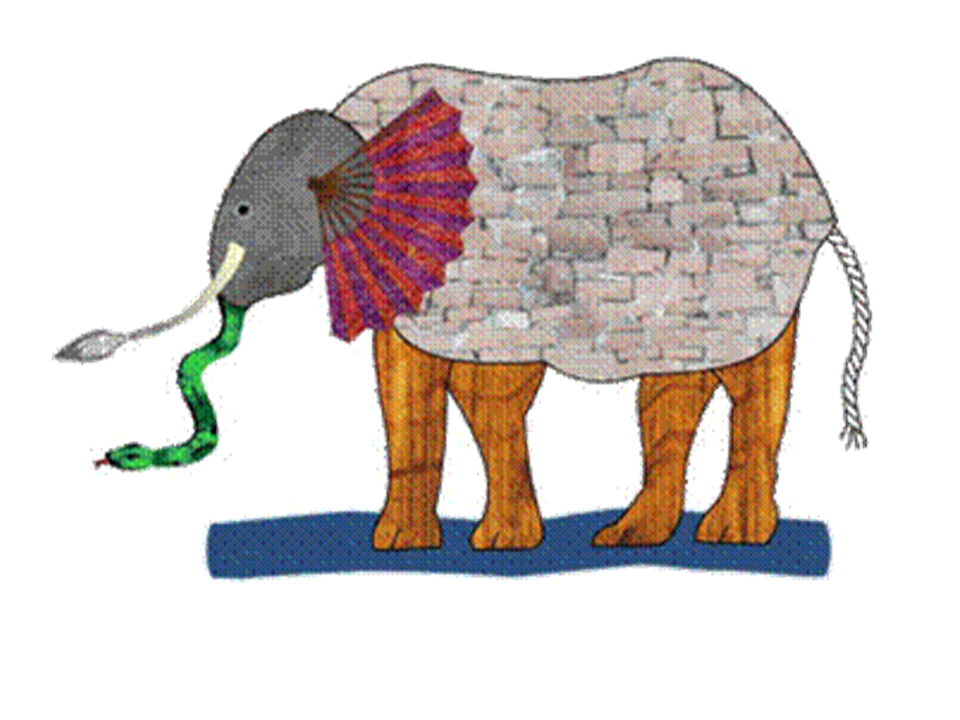
The Blind Men and the Elephant: Poetry to Illustrate Perspectives

In the beginning of my courses, I like to use this poem by John Godfrey Saxe called, The Blind Men and the Elephant.  Sometimes it is called, The Six Men of Indostan.

I read the poem as I show it on the front screen.  I ask the students to discuss the meaning of the poem.  The higher the level of student, the better your responses are likely to be.

I liken the six men as the six main perspectives of psychology.  They are looking at the same behavior, but each is limited by its own definition and focus, just like the blind men. "Though each of them were partly right, and all were in the wrong."

A PowerPoint version of the poem can be found here:


posted by Chuck Schallhorn

Friday, December 12, 2014

Historical Psychology Texts Online

One of the emails I receive is from "The Scout Report" from the University of Wisconsin.  They put out a weekly set of amazing resources out on the web.  In today's email, I found this wonderful set of historical documents compiled by Mike Palij.

Here is the selection of the entry in today's email.  I apologize for the formatting issues.

HathiTrust Digital Library: 19th-20th Century Psychology Texts·http://babel.hathitrust.org/cgi/mb?a=listis;c=715130871
The HathiTrust Digital Library is a partnership between academic and research institutions "offering a collection of millions of titles digitized from libraries around the world." Named "Hathi" for the Hindi word for elephant - because the apocryphal elephant never forgets - this free resource will serve anyone with an internet connection and a thirst for knowledge. For instance, the current link navigates to a collection of 19th and 20th century psychology texts, 238 of which may be read in full on the site. With volumes such as The American Journal of Insanity, published in 1845, and the Archives of psychology, spanning from 1908 to 1923, there is much to explore in these pages. If psychology is not for you, the Collections section is another great place to scout. Here, readers can explore what others are searching for in the Trust, such as "Islamic Manuscripts" and "Records of the American Colonies." For those doing any sort of historical research, this site is definitely worth while.


Here is a link to a scanned version of Watson's textbook on comparative psychology:
http://babel.hathitrust.org/cgi/pt?id=mdp.39015003744326;view=1up;seq=1

Enjoy.


posted by Chuck Schallhorn

Friday, October 5, 2012

Dang! I told this fib about Watson's sex life for years!

Drat! It turns out that at least one of the stories I told for YEARS about John Watson turns out to be false.

The apocryphal story: John Watson was dismissed from his job at Johns Hopkins "not due to his affair with graduate student Rosalie Raynor, but rather because it was discovered that Watson was conducting research on physiological responses during sexual intercourse."

I can't remember when/where I learned the story (source amnesia!) but I liked talking with students about John Watson's "career arc": from one of the most famous and influential psychologists in the world to a fired professor because of something he might have thought of as "touchy-feely emotional stuff."

This is another good example why we, and our students, should try to think critically about information we find in textbooks. The article documents how this fib entered the lore of psychology and how it was perpetuated. I wonder how many other apocryphal stories are floating around in our books?

By the way, the site this article is from, Advances in the History of Psychology, is a good one! LOTS of historical information that teachers could use to fill in background on our topics.


posted by Rob McEntarffer

Thursday, March 8, 2012

The surprising and continuing saga of Little Albert

I was fascinated and surprised a couple years ago when at team of psychological historians"solved" the long-standing mystery of the identity of Little Albert. I loved the story of their research, their exhaustive and careful examination of all the evidence they could find, and their explanation of the reasoning behind their conclusion about his identity.

Well, now I'm even more impressed: They didn't stop there! Some members of the original team kept digging into some details in the original story as told by Watson (including the detail that Little Albert was a "healthy, normal boy" when the researchers found he died a few years later of hydrocephalus.) The research team recently published their conclusion: Little Albert was likely suffering from neurological issues since birth, and that Watson purposefully misrepresented his condition when we wrote about the case.

A good example of researchers not quitting and eventually uncovering an ugly truth that casts further doubt on Watson's legacy.

photo credit: http://www2.macleans.ca/2012/02/22/bad-behaviour/

posted by Rob McEntarffer

Thursday, May 6, 2010

Psychology Today Blog - Head of the Class


I just discovered that the excellent Dr. Dana Dunn (long-time AP psychology exam reading Table Leader, wonderful college psych teacher, and all around great guy) writes a blog about teaching psychology for the magazine Psychology Today. The blog is called Head of the Class, and I'm just starting to dig into the archives. The current post is about grading, and Dana gets into the topic in a funny and useful way, I think. I suspect Dana would love comments from high school psych teachers (I added one!).


posted by Rob McEntarffer

Thursday, January 21, 2010

Using the Classics in the History of Psycyhology with Personality Theory

One way to cover the various personality theories is to have your students read the original writings of the classic theorists throughout history. The Classics in the History of Psychology at http://psychclassics.yorku.ca/author.htm includes many of the major theorists' writings.

We would ask that as visitors to the Teaching High School Psychology blog read through the many articles on The Classics in the History of Psychology, they would share their evaluations in the comments section.


Thursday, November 19, 2009

Human Intelligence Website Biography Map

The Human Intelligence website at the University of Indiana includes an interactive map of major contributors to the field of intelligence. A detailed biography is included for each individual.

To go to the "History of Influences in the Development of Intelligence Theory" map, simply click on the graphic to the right or go to http://www.indiana.edu/~intell/map.shtml

For additional information go to the home page for the Human Intelligence site at http://www.indiana.edu/~intell/

Tuesday, November 17, 2009

History of IQ Testing

IQ Tests are primarily a product of the 20th Century . While most textbooks provide a brief history, starting with Binet, a few websites do the same.

The ACE Intelligence Website at http://www.aceintelligence.com/detailed_history_of_iq.php, gives a fairly detailed history of IQ testing following various individuals important in test development including a few prior to Binet.

The IQ Test Center at http://www.iqtest-center.com/history.php provides a brief history of testing similar to many textbooks.

Classics in the History of Psychology (http://psychclassics.yorku.ca/author.htm) have a number of the original articles on intelligence testing. They include:

Baldwin, James Mark, Cattell, James McKeen, & Jastrow, Joseph. (1898). Physical and mental tests. Psychological Review, 5, 172-179.

Binet, Alfred. (1916). New methods for the diagnosis of the intellectual level of subnormals. In E. S. Kite (Trans.), The development of intelligence in children. Vineland, NJ: Publications of the Training School at Vineland. (Originally published 1905 in L'Année Psychologique, 12, 191-244.)

Cattell, James McKeen. (1890). Mental tests and measurements. Mind, 15, 373-381.

Terman, Lewis M. (1916). The uses of intelligence tests. From The measurement of intelligence (chapter 1). Boston: Houghton Mifflin.

Monday, October 26, 2009

Little Albert: Found!


I haven't read the American Psychologist article about this yet, but this summary from the Mind Hacks blog summarizes the story pretty well: Dr. Hall Beck from Appalachian State University has been trying to track down the identity of "Little Albert" for 7 seven years, and he succeeded! It sounds like the article describes in detail how he used historical records, photographs, and facial recognition experts to figure out the true identity of the baby Watson and Rayner worked with all those years ago. Spoiler alert: don't read the end of the end of the blog post if you want to read the original and find out Albert's fate.

Also, Mary Cover Jones published an article years after the Little Albert study on using classical conditioning to "cure" a child of fears: A Laboratory Study of Fear: The Case of Peter.

Friday, September 4, 2009

Phineas Gage: Newly Discovered Picture

Recently, a picture believed to be that of Phineas Gage holding the tapping iron which pierced his skull has surfaced. For thirty years Jack and Beverley Wilgus have own the photograph not knowing its significance. The possibility of the shot being of Gage came out when they placed it on Flickr, a picture sharing website. The couple have written an article, "Face to Face with Phineas Gage", for the July 2009 issue of the Journal of the History of the Neurosciences (http://www.tandf.co.uk/journals/titles/0964704X.asp) or go to http://brightbytes.com/phineasgage/index.html.

Newspaper and blog accounts of the photograph can be found at:

LA Times Website
http://www.latimes.com/news/nationworld/nation/la-sci-gage16-2009jul16,0,6843461.story

The Boston Globe Website
http://www.boston.com/news/local/massachusetts/articles/2009/07/22/newly_discovered_image_offers_fresh_insights_about_1848_medical_miracle/

The New York Times Website
http://tierneylab.blogs.nytimes.com/2009/07/22/the-curious-case-of-phineas-gage-refocused/

Advanced in the History of Psychology Blog
http://ahp.apps01.yorku.ca/?p=730

The Neurophilosophy section of the Science Blogs
http://scienceblogs.com/neurophilosophy/2009/07/meet_phineas_gage.php

The September 2008 issue of The Psychologist from the British Psychological Society, includes an article which deputes many of the common beliefs of Gage's story at http://ahp.apps01.yorku.ca/?p=515#more-515

A special thanks to Tack Chace, Shrewsbury High School, Shrewsbury MA, whose initial posting on the AP Psychology Electronic Discussion Group provided the impetus for this posting.


Thursday, August 27, 2009

This Week in the History of Psychology Podcast

This Week in the History of Psychology is a weekly podcast written and produced by Christopher D. Green, professor of psychology at York University in Toronto, Canada. Each episode is about 25 minutes in length and is freely available to anyone who is interested in the topic. Its main intended audience is students in college and university courses on the history of psychology.

The focus of each episode is an interview with an expert on a featured event that occurred during that particular week in psychology's past. In addition, each episode begins with brief descriptions of several events from that week and ends with a celebration of the week's birthdays (and other anniversaries).

Wednesday, August 26, 2009

Significant Experiments in Psych - Wikipedia's version


Wikipedia maintains " a list of historically important scientific experiments". The list of psychology experiments (about 3/4 of the way down the page) includes both some obvious choices and a few surprises. The first psych experiments were back in 1021? The Kansas City Preventive Patrol experiments? Makes me wonder about who is actively contributing and editing this wikipedia entry. What other experiments would you put on the list? What would you take off?

Tuesday, August 25, 2009

Top Unethical Experiments in Psychology

In my searching the internet, I came across this listing of the top ten unethical psychological experiments. The list includes many experiments (Standford Prison, Milgram's Obedience, Baby Albert, etc.) that are discussed in almost every psychology course. Throughout my research, while the listing is on a number of websites and blogs, I was unable to determine the author.

The list can be found at http://mytechnologyworld9.blogspot.com/2008/11/top-unethical-psychological-experiments.html and might make an interesting discussion tool for ethical research.

Monday, August 24, 2009

Classics in the History of Psychology

The following was taken from the Classics in the History of Psychology website at http://psychclassics.yorku.ca/what.htm

Classics in the History of Psychology is an effort to make the full texts of a large number of historically significant public domain documents from the scholarly literature of psychology and allied disciplines available on the World Wide Web. There are now over 25 books and about 200 articles and chapters on-line. The site also contains links to over 200 relevant works posted at other sites.
The target audience is researchers, teachers, and students of the history of psychology, both for use in their courses on the history of psychology, and for the purposes of primary academic research. To assist undergraduate teaching, in particular, original introductory articles and commentaries, written by some of the leading historians of psychology in North America, have been attached to a number of the most important works.
The initial set of documents was chosen by the Editor of the project, Christopher D. Green of York University, in consultation with a number of other professional historians of psychology. Many of the subsequent documents were selected in response to the requests of the site's users.