Showing posts with label 10 Personality. Show all posts

Thursday, January 8, 2015

New Personality Lesson Plan from TOPSS!

If you're a member of TOPSS, you may have seen this announcement (if you're not a member of TOPSS, now is a GREAT time to join!) The new Personality lesson plan looks great!

"New TOPSS Unit Lesson Plan: Personality

The APA Education Directorate and the TOPSS Committee are pleased to announce a new TOPSS unit lesson plan on Personality.  Written by Simine Vazire, PhD, of Washington University in St. Louis, and reviewed by TOPSS members R. Scott Reed and Wendy Hart, the unit plan includes a content outline, classroom activities, critical thinking and discussion questions, references and suggested readings, and two appendixes.  The six lessons cover An Introduction to Personality, Assessment of Personality, Psychodynamic Theories of Personality, Trait and Social-Cognitive Theories of Personality, Humanistic Theories of Personality, and Personality: Culture, Work, and Health.

The lesson plan is available to APA teacher affiliates at http://www.apa.org/ed/precollege/topss/lessons/index.aspx.  Please remember that new lesson plans on Psychological Disorders and Perspectives in Psychological Science are also available online! "


posted by Rob McEntarffer

Sunday, November 25, 2012

Introverts

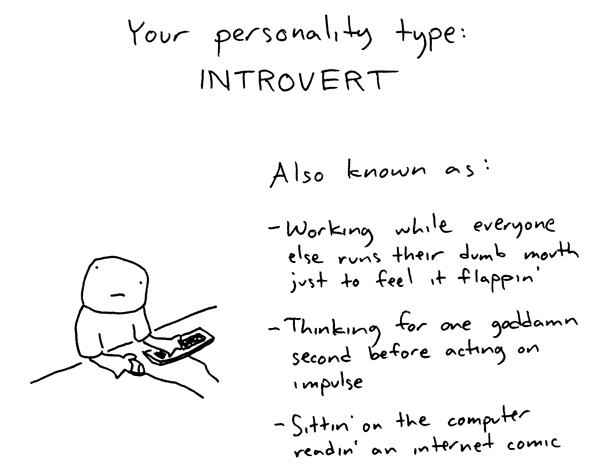
Like many introverts, I cherish my time alone.  Many of my friends and family have often misunderstood my need to be alone.  The first cartoon is definitely me.  While I have things to say, I often choose not to say them--and I find those who say whatever pops into their head to be quite annoying.  I hate small talk.  I am often overwhelmed by the energy that gets sucked out of me by my more social colleagues and friends.  While I love my job of being an educator, I need time to recharge.  But my being alone does not mean lonely.

I'm not sure how many psych teachers (or teachers in general) are also introverts, but I've read quite a number of anecdotal stories of actors who are shy/introverted in real life.  In any case, I was thinking about this topic over my Thanksgiving break and decided to share a couple of items.


First is a book about being an introvert.
Hardcover:

Softcover:
Quiet: The Power of Introverts in a World That Can't Stop Talking

Second is the Brainpickings recent entry on the book above--it also contains a couple of videos, one is an RSA animation and a TED talk.  I definitely recommend them if you wish to understand introverts.
http://www.brainpickings.org/index.php/2012/10/23/susan-cain-molly-crabapple-rsa/

Additionally, I decided to search for and post some cartoons. I am also enclosing the original links.  I have no intent to violate copyright, but am simply sharing what I have found online.


http://manicdepressiveblog.files.wordpress.com/2012/04/introvert-vs-extrovert.png?w=176&h=300


====================================================


http://www.abrahamingle.com/wp-content/uploads/2011/06/your-personality-type-introvert1.gif


====================================================


http://www.option.org/userfiles/library/img_introvert.gif


====================================================

http://www.socmedsean.com/wp-content/uploads/2011/04/social_media_introvert_cartoon.gif


====================================================

http://25.media.tumblr.com/tumblr_me245deDR41rtnd6jo1_500.jpg


====================================================


https://lss.at.ufl.edu/training/blog/wp-content/uploads/2012/07/introvert1.jpg


====================================================

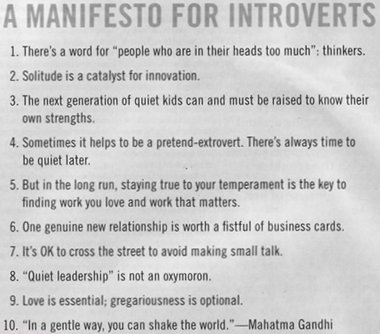
http://www.in5d.com/images/introvert-manifesto.jpg


====================================================
http://lindseymbarnett.files.wordpress.com/2012/04/136585801168983542_vjpocdlu.png?w=300&h=277


====================================================
https://blogger.googleusercontent.com/img/b/R29vZ2xl/AVvXsEh42h41G4c8DGoJ0tV_SiN03bOOt3ZuanXkp3EdJv9vqzkiD_ZzxBDUhG-zvDpzai_ZX2uiXtTnW_fL0Td3qBfU6uKCQbG2m36cGxz_AYXl8GTwY55F0aYftqCfMpgwFiczPNWwxsjgOKE/s400/Introversion+and+Extroversion.jpg


====================================================
This cartoon below is quite large and may not fit into your browser window--click on it to see the entire cartoon.
http://fc02.deviantart.net/fs71/i/2012/225/5/1/how_to_live_with_introverts_guide_printable_by_sveidt-d5b09fj.jpg


====================================================


Additional links to introversion and articles about us:
http://manicdepressiveblog.wordpress.com/2012/04/16/the-confusing-life-of-an-introvert-and-why-it-is-so-dangerous-to-force-ourselves-to-become-extroverts/

http://www.socmedsean.com/confessions-of-a-social-media-introvert/

http://www.meettheintroverts.com/

http://deptoflindsey.com/2012/04/10/an-introverted-retort/

http://www.abrahamingle.com/10-myths-about-introverts/

http://thosenotcomplicatedneednotapply.blogspot.com/2012/01/introverts-extroverts.html


posted by chuck Schallhorn

Tuesday, February 28, 2012

Please Hear What I Am Not Saying

This is a poem that I first was exposed to back in 1981 in my first university psychology class at Rochester Institute of Technology.  My professor was Dr. David Wiesner.  I later found out the original author was Charles Finn.  I have used this poem in a variety of contexts, from supplementing the Personality Theories (use of personas/masks, "presentation of self," to exploring Rogerian ideas related to identity and self-concept) to use with groups/classes that had difficulty getting past the "fronting" that we tend to do.  My favorite is to do a dramatic reading of the poem, slowly and with pauses so I can look around the room and gauge reaction.

I shared this with my AP class today--they, along with previous student were quite taken with the fundamental truths to the words.  I have had some students deny "the reality" of poem, saying they were the exception to this, therefore it is not true.

"The thicker the skin, the deeper the wound."

Here is a link to a .pdf version of the poem.

Please Hear What I Am Not Saying
an adaptation by Dr. David Wiesner
original by Charles C. Finn


Don't be fooled by me.
Don't be fooled by this mask that I wear.
For I wear a thousand masks and none of them are really me.
Masks that I'm too afraid to take off, fearing that you'll get to know me.

Pretending is an art that is second nature to me.
I'm pretending that I am in command and that I need no one.
That I'm cool and that my surface is so smooth and I cannot be shaken by anything.
I act as if I am in control, but please don't for one moment be fooled by my surface, that's only my mask.

Beneath this mask lies no smugness, no complacence.
Beneath this mask dwells the real me in confusion, loneliness, and fear.

But I don't dare tell you that.
I don't dare tell you that this is my mask.

I'm frightened by all the possibilities of my weaknesses being exposed.

I think about it all the time. Will I look like a fool?
That's why I work frantically to create this mask to hide behind in my relationship with people.
This nonchalant, sophisticated facade helps me pretend and shields me from the glance that knows me.
But such a glance is precisely my only salvation.
It's my only salvation if, however, the glance is followed by  acceptance and love.
It's the only thing that can liberate me from myself, from my  own self-built prison...from the barriers that I have so  painstakingly created.
It is only that glance that will assure me of what I cannot assure in myself and, that is, that I am really worth something.

But I don't tell you this. I don't dare to. I'm afraid to.  I'm afraid that your glance will not be followed by acceptance and love.
I'm afraid that you'll think less of me...that you'll laugh and that your laugh would kill me.
I'm afraid that deep-down I am nothing. That I'm just no good and soon you're going to find out and you'll no longer love me...that you'll reject me.
So I play my game. My desperate, pretending game with the facades of assurance from without and that of a trembling little child from within.
And my life becomes a front.
And I idly chatter to you in suave tones about anything that really means nothing.
And yet I can never tell about the crying inside of me...of my greatest hurts...of my deepest fears...my concerns.
I can't tell you that because I am afraid.
So please listen carefully not to what I am saying, but to what I am not saying.
To what I'd like to be able to say. And for what my very own survival I need to say.

I dislike this hiding...honestly.
I dislike this phony, superficial game I'm playing.
I really would like to be genuine and spontaneous and me.
But you've got to help me.
You've got to hold out your hand.

You've got to hold out your hand even when it appears to you that it's the last thing I want from you, because I am going to share a secret with you about myself;
the moment I act like I need you the least is the moment I need you the most.

The moment I act like I need you the least is the moment I need you the most.

Don't be fooled by this mask. When you see anger in this mask, don't be fooled for one second...that's not anger, that's hurt.
The mask of anger is easier to show than the mask of hurt.
And if we make the error of looking at people's masks only to see anger on their face, we may end up in a confrontation only because we missed the point.

You have the power to wipe away this blank stare of the "breathing dead" beneath this mask.
It will not be easy for you.
Long felt hurts make my masks endure. The nearer you approach me the harder I may strike back.
Irrationally, I fight against the very thing that I cry out for - my identity.

You may wonder who I am. You shouldn't.
Don't be fooled by the face I wear.
I am someone you know very well.
I am every man and woman and child.
I am you.


Posted by Chuck Schallhorn

Sunday, January 29, 2012

Big Think and Psychology Resources

For some time now, I have been receiving regular emails from a web site called "Big Think."  While the site contains content ranging from economics, technology, style, culture, history, and more, it also contains neuroscience, psychology, and identity.

Like TED, the site contains videos from experts, but they are more individual and up-close.  These videos typically occur within longer blogs related to a variety of topics, the best of which relate to psychology and neuroscience.  I will link to some favorites below.  Because the videos are short, they can be wonderful additions to what we do in the class, to have another person (read: expert) explain an idea that we'd like to get across to our students.  Additionally, the content creates a wonderful little professional development opportunity for we teachers.

Science and Technology Link Page
Brain Bugs: Hallucinations, Forgotten Faces, and Other Cognitive Quirks (with V.S. Ramachandran)
How ADHD Affects the Brain
This is Your Brain During Orgasm
Your Storytelling Brain (with Michael Gazzaniga)


There are so many other stories and content that are fascinating, I recommend taking some time to explore.  It is well worth it.


posted by Chuck Schallhorn

Friday, January 29, 2010

Personality Tests Published Online

Last year, as part of Wikipedia's entry on the Rorschach Inkblot test (http://en.wikipedia.org/wiki/Rorschach_test), Dr. James Heilman, an emergency-room physician in Canada, posted all ten inkblots along with the most common responses to each. A controversy erupted from the posting. Many felt, not only were copyright laws violated, the integrity and validity of the test had been compromised. During the uproar, Dr Heilman was investigated for unprofessional behavior by his local medical association.

If you go to https://antipolygraph.org/cgi-bin/forums/YaBB.pl?num=1109032158 you will find a posting for a discussion group on Antipolygraph.com in which the person listed the first 75 questions of the MMPI-2. Here, too, questions of ethics and copyrights can be raised.

While I am not advocating the use of these items in your classroom, that is a question for each teacher to individually answer, I am suggesting both postings can make for a very interesting class discussion on testing, copyrights, ethics, keeping things confidential in the internet age, etc.

Thursday, January 28, 2010

Birth Order and Personality

Samantha Murphy has created a very informative website on birth order and personality. The site provides a basic summary of what birth order is and what personality traits tend to be correlated with each position. From my limited knowledge of birth order, the site appears to be fairly accurate and can be found at http://www.birthorderandpersonality.com/index.html

If anyone has further information on the accuracy of the site and/or information on Samantha Murphy's background, please post a comment below.

Tuesday, January 26, 2010

UC Berkeley Webcast Psychology of Personality

The University of California at Berkeley provides a webcast for many of their courses including Psych 150: Psychology of Personality for the 2005 Fall semester. While probably not something you would show to high school students, the twenty-eight videos provide a good background to what is currently being taught at the upper division undergraduate level. The Psychology of Personality videos can be found at http://webcast.berkeley.edu/course_details.php?seriesid=1906978253

Every semester a large number of courses are recorded and posted to the web. To find out more go about Berkeley's webcast program go to http://webcast.berkeley.edu/

Monday, January 25, 2010

Personality Theories Website

Dr. C. George Boeree from the Psychology Department at Shippensburg University in PA, has developed an electronic textbook (e-text) designed for a post-secondary level personality theory course.

The text provides a good background to many of the personality theories discussed in a high school psychology course. The main page for the text can be found at http://webspace.ship.edu/cgboer/perscontents.html The writings are available online or as a PDF file as well as in Spanish or German.

Friday, January 22, 2010

Psych Test Prep Tools from The Psych Files

Back in early May we told you about a new reviewing technique Michael A. Britt, host of The Psych Files podcast (www.thepsychfiles.com), was developing called MAPPR or Make a Personal Psychology Review. In a MAPPR, Michael combines a concept map with audio explanations for each idea presented.

Since May, Michael has changed the MAPPR name to "The Psych Test Prep Tool" and created a number of new tools including two for the personality unit. All of the Psych Test Prep Tools can be found at http://www.thepsychfiles.com/mappr/

Thursday, January 21, 2010

Using the Classics in the History of Psycyhology with Personality Theory

One way to cover the various personality theories is to have your students read the original writings of the classic theorists throughout history. The Classics in the History of Psychology at http://psychclassics.yorku.ca/author.htm includes many of the major theorists' writings.

We would ask that as visitors to the Teaching High School Psychology blog read through the many articles on The Classics in the History of Psychology, they would share their evaluations in the comments section.


Wednesday, January 20, 2010

The Big Five Personality Test

The debate on whether or not to give high school psychology students personality or intelligence tests been going on for as long as I can remember. Rather than venture into the debate, the Midnight Postings will include links to various personality tests and allow each individual teacher to decide whether or not to use them.

Please be aware, personality tests posted on this site have not been thoroughly examined. It is extremely important that teachers preview personality and intelligence tests before using them in class.

The Big Five Personality Test was developed by Oliver John from the University of California Berkely. This online test can be found at http://www.outofservice.com/bigfive/

Tuesday, January 19, 2010

The Freud Museum

The Freud Museum in London would probably be the ultimate field trip for any psychology class. To see Freud's couch up close and personal would be the highlight of many a psychology teacher or student.

While a trip to London is probably not be in the works, a visit to the Freud Museum's website might be a close substitute. The site can be found at
http://www.freud.org.uk/

Pay particular attention to the Photo Library, Education and Shop sections. Just image discussing Freudian Slips as you walk around your classroom in Freud Slippers from the giftshop.

Perhaps some of the visitors to the THSP blog from the London area could provide some insights into the museum in the comments section.


Monday, January 18, 2010

The Personality Project

What better way to begin our Midnight Postings for the Personality Unit with The Personality Project from William Revelle of the Psychology Department at Northwestern University? The project provides a great resource for "those interested in personality theory and research to current personality research literature" as stated by the website.

The Personality Project can be found at http://personality-project.org/

Saturday, September 26, 2009

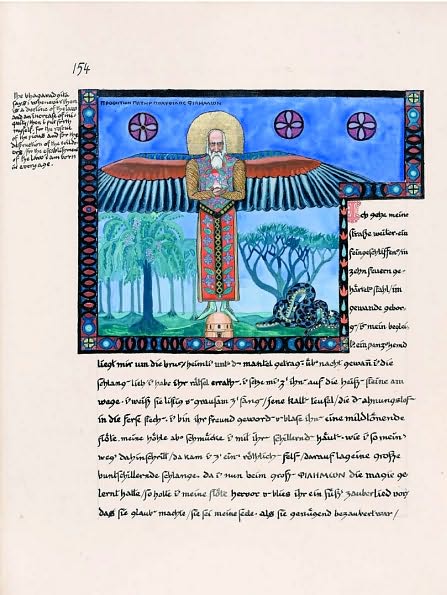
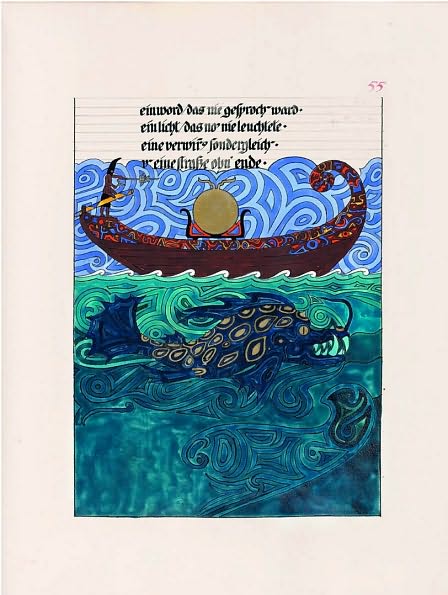
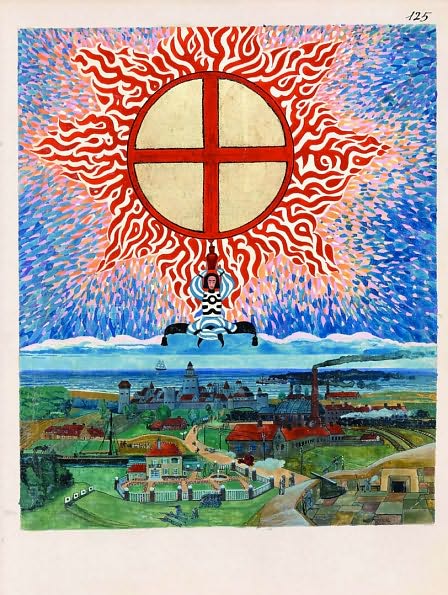
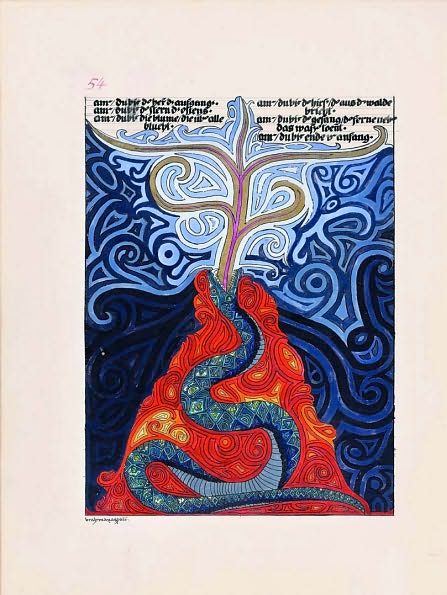
Jung's The Red Book coming soon

Thinking of updating your wish list? You might want to consider adding this one: in October WW Norton will publish Carl Gustavus Jung's The Red Book for the first time. Featured in a lengthy article in the New York Times Magazine earlier this month and referred to by the publisher as "the most influential unpublished work in the history of psychology," the book is from a journal written and illustrated by Jung over a 15 year period. It was been hidden from the public view by Jung's heirs until they very recently made the decision to publish it.

What's the book about? Here's a quote from the NYT article to get you started:
The Red Book is not an easy journey — it wasn’t for Jung, it wasn’t for his family, nor for Shamdasani, and neither will it be for readers. The book is bombastic, baroque and like so much else about Carl Jung, a willful oddity, synched with an antediluvian and mystical reality. The text is dense, often poetic, always strange. The art is arresting and also strange. Even today, its publication feels risky, like an exposure. But then again, it is possible Jung intended it as such. In 1959, after having left the book more or less untouched for 30 or so years, he penned a brief epilogue, acknowledging the central dilemma in considering the book’s fate. “To the superficial observer,” he wrote, “it will appear like madness.” Yet the very fact he wrote an epilogue seems to indicate that he trusted his words would someday find the right audience.
At the bargain price of $105 (at Barnes and Noble -- Amazon appears sold out and now has a delivery date of December for new orders) I'm guessing this one will be a perfect present for others to give you!

Finally, as a geek I personally love the fact that "a 10,200-pixel scanner suspended on a dolly clicked and whirred, capturing the book one-tenth of a millimeter at a time and uploading the images into a computer." Below are some of the images for you to enjoy.

Tuesday, July 28, 2009

Wikipedia vs. Rorschach?

The New York Times reports that Rorschach psychologists are furious that Wikipedia has all ten of the original images along with common responses to each -- something that the Times calls "the equivalent of posting an answer sheet to next year’s SAT." Because they are more than 90 years old the plates have lost their copyright status in the U.S. Is this a serious ethical breach? Or is keeping them private "restricting information" as the doctor who posted the images claims?

The Wikipedia images are copied from a Geocities site with much more information and is far more like a cheat sheet than the Wikipedia site

And interestingly, there is not a word about the criticisms of using the Rorschach in the first place. Here's a nice analysis from Scientific American (2001) on the subject (PDF only).