Monday, February 9, 2015

More on Teens and Their Amazing (and unpredictable) Brains

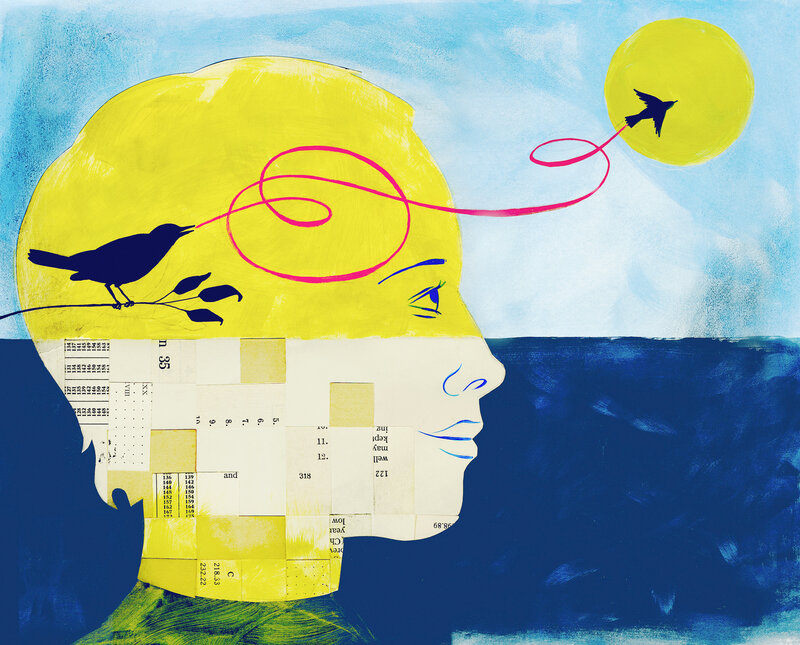
NPR has delivered another great author interview with a psychologist who has written a book about the teenage brain.  Dr. Frances Jensen has updated research in the book, The Teenage Brain: A Neuroscientist's Survival Guide to Raising Adolescents and Young Adults.

The interview deals with addiction, binge drinking and marijuana use and its impact on the teenage brain, the effects of constant access to stimuli, and brain myelination.

There are many neuro books out there, but this one is highlighting recent research to assist in our understanding of those in our charge.


The NPR interview can be found at this link:
http://www.npr.org/blogs/health/2015/01/28/381622350/why-teens-are-impulsive-addiction-prone-and-should-protect-their-brains

The book can be purchased here:

posted by Chuck Schallhorn

Friday, February 6, 2015

Careers in Psych--Updated for the Online World

Last week, I posted a "Careers in Psychology" document from Drew Appleby, a retired psychology professor.  Someone shared the post with him and he sent me some updated sources that are great for the internet. Simply amazing stuff.  Check out this list, it has 172 majors of interest to psychology majors.  Included are multiple links for each profession.

http://www.teachpsych.org/resources/Documents/otrp/resources/appleby11.pdf


posted by Chuck Schallhorn

Thursday, February 5, 2015

Vaccines, Skepticism, Evidence, the Group Mind, and Cognitive Dissonance

I was listening to this on NPR earlier this week and it immediately struck me as a psychological story.  It's important to listen to the woman being interviewed. She describes why she was a "crunchy" mom, one who surrounded herself with like-minded others she met online who shared and confirmed fears about vaccinations and autism.

When she did not vaccinate and her daughter developed autism anyway, she had to reevaluate her stance.  This is her story.  It could be a great tool to examine evidence, the use of skepticism, how groups influence us, confirmation bias, and cognitive dissonance and its reduction.

The photo is of the woman and her children and was posted with the article on npr.org.

http://www.npr.org/blogs/health/2015/02/04/383567862/once-a-vaccine-skeptic-this-mom-changed-her-mind


posted by Chuck Schallhorn

Your Brain, Love, and Addiction

I recently ran across this article on love that compared being in love to addictions.  They linked to the Rachael Leigh Cook, "This is your brain on drugs" commercial, which was one of my all-teim favorites.  This post was an excuse to share the video.

Here is the article: https://www.psychologytoday.com/blog/love-and-sex-in-the-digital-age/201501/is-your-brain-love
I suspect your students might like or hate this, depending upon their current romantic state.


posted by Chuck Schallhorn

Wednesday, February 4, 2015

Grammar and Its Impact

For those who know me, I am a bit of a grammarian.  I can be annoying with all my pointing out of, what to me, are obvious errors.  I emphasize grammar and writing in my classes, much to the consternation of my students.  I endeavor to write posts free from mistakes.  On this note, a wonderful site called Grammarly was shared with me by Nikolas Baron.

Psychologically, the way we write matters to our respective audiences, whether they are friends, family, teachers, or employers.  So imagine my happiness when I read this infographic.  I was very pleased to see it.  The data in the infographic comes from research conducted with over 400 freelance writers.  Of course, have the patience and perseverance to do grammar and writing checks means that these folks are likely higher in the conscientiousness scale of the OCEAN (Big Five) personality test.

To that end, Grammerly also has a grammar checker online.  Check it out. I ran this post through the service after a brief log in.  It is available as a Chrome plugin.  Very cool.


posted by Chuck Schallhorn

Brain Games Episode Concepts/Episode Guide

Hi Everyone,

I love Brain Games on the National Geographic Channel.  That said, I have not been able to find a decent episode guide, or any actually.  So I asked my two wonderful TAs, Jai and Karlie, to watch Season Two of Brain Games. TV.com has the names of the episodes, but nothing in detail.
My TAs have compiled a chart to describe what each demonstration is in each of the episodes on Disc 1. The chart is linked here.

My question is this:  Do you find this useful? Should I have them do the rest of the episodes in the series? Please leave a yes or no in the comments, or send me an email at schallhornpsych AT gmail.com.

As always, Brain Games and other resources can be found in our Psych Store.

Thanks and Enjoy.

posted by Chuck Schallhorn


Top 10 All-Time Posts of the THSP Blog


image courtesy of teachhub.com

Good morning,

I thought I would share out what have been the top posts over the history of this blog.

#1 is the FRQ released questions, responses, stats, and keys
http://teachinghighschoolpsychology.blogspot.com/2015/01/ap-free-response-questions-updated-to.html
Kent first had the post in 2010 which was updated recently.  The original post has had almost 47,000 hits

#2 Rob's post on itchiness and being able to resist the feeling
http://teachinghighschoolpsychology.blogspot.com/2012/12/can-you-get-through-this-entire-post.html

#3 Optical Illusions, another Kent post
http://teachinghighschoolpsychology.blogspot.com/2009/03/optical-illusions.html

#4 Developmental Psychology Lesson Plans
http://teachinghighschoolpsychology.blogspot.com/2010/01/developmental-psychology-lesson-plans.html

#5 Picture Puzzles
http://teachinghighschoolpsychology.blogspot.com/2009/11/picture-puzzles.html

#6 Harry Potter and the Myers Briggs (I suspect this was more Potter and less Briggs)
http://teachinghighschoolpsychology.blogspot.com/2013/09/harry-potter-and-myers-briggs.html

#7 Superheroes and the Brain Assignment
http://teachinghighschoolpsychology.blogspot.com/2009/09/superheroes-brain-assignment.html

#8 Using 12 Angry Men in Intro Psych
http://teachinghighschoolpsychology.blogspot.com/2009/05/using-12-angry-men-in-intro-psych.html

#9 Sternberg's Triangular Theory of Love
http://teachinghighschoolpsychology.blogspot.com/2012/02/sternbergs-triangular-theory-of-love.html

#10 Radiolab, The Prisoner's Dilemma and an Aha! Moment
http://teachinghighschoolpsychology.blogspot.com/2011/01/prisoners-dilemma-and-my-aha-moment.html

I hope you enjoy these top posts and the future posts we share.

posted by Chuck Schallhorn

Tuesday, February 3, 2015

James Randi and The Secrets of the Psychics

Back in the day, I had this video on VHS and have used it in a variety of ways, from a substitute lesson plan to using it as a prompt and evidence for essay writing on critical thinking.  I converted my VHS to DVD for personal use, by recently found it on YouTube.

I love James Randi and how he uses rationality and critical thinking to poke holes in the methods and claims of psychics.  This is a great addition to any intro to psychology class. In this documentary, he shows how magic can be used to recreate what people claim to do in the name of being psychic, palm reading, horoscopes, faith healing, and more.  Great stuff if you are a skeptic.

Additionally, for those who claim that psychics are real, direct them to his website, http://web.randi.org/.  He also has had the $1,000,000 challenge since the 1980s.  He will give a person that money IF s/he can scientifically demonstrate parapsychological powers.  To date, those who make claims do not take the challenge. To the few who do, they fail.  It is a classic "put up or shut up" scenario.


 posted by Chuck Schallhorn

Psychology Benefits Society

If you like to keep up with psychological news, there is a nice site for you called the Psychology Benefits Society hosted by the APA.

Their main page is here: http://psychologybenefits.org/

The article that I received in my email this morning was about the APA and sexual minorities.  I subscribe to the "get involved" newsletter.  There are others you can follow.

Recent topics include racism, microaggressions, subtle racism, teen suicide prevention, parenting and timeouts, and human trafficking.  Great source of scientific information about many different aspects of psychology.

This link is for getting involved and receiving their emails.


posted by Chuck Schallhorn

Monday, February 2, 2015

List of Top Unethical Psychological Studies

Quick post this morning.

The usual suspects are here and Mental Floss has created a list of the most unethical psychological studies ever done.  The list also has several clips that can be found on YouTube.  There are overviews of the Zimbardo prison study, Milgram, Little Albert, Darley and Latane's research on bystander effect, Harlow and his monkeys, and more.  Could be a great handout or discussion starter about the ethics of research for students.

http://mentalfloss.com/article/52787/10-famous-psychological-experiments-could-never-happen-today


posted by Chuck Schallhorn